







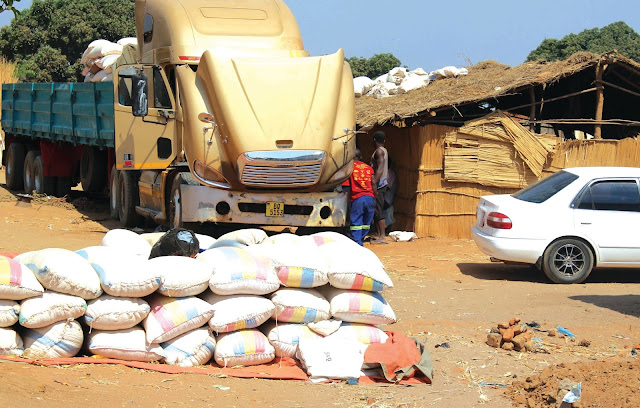
Zambia’s refugee-hosting settlements are already producing food at scale.
The real problem is not production.
It is logistics.
A recent study presented during the validation of the Agricultural Roadmap for Rural Settlement Areas Hosting Forcibly Displaced People and Local Communities in Zambia reveals a deeper structural issue affecting agricultural growth in refugee settlements: farmers are growing crops, but they remain disconnected from functioning commercial markets.
The findings expose a familiar challenge seen across many rural agricultural economies in Africa — production without market systems.
Researchers found that nearly 90% of surveyed households across Meheba, Mayukwayukwa and Mantapala settlements are engaged in farming. Yet very few are participating in higher-value activities that actually improve incomes.
Only 26% are involved in additional value chain activities such as trading, while less than three percent participate in processing, packaging or other value-added functions.
That gap matters.
Because agriculture only becomes economically transformative when products can move efficiently from farmgate to market.
Without aggregation systems, transport networks, storage facilities, cold-chain infrastructure, processing capacity and access to finance, farming communities remain trapped at subsistence level — regardless of how much they produce.
As the researchers noted:
“We have identified that agriculture is already the dominant livelihood activity across the settlements, but producers remain disconnected from structured commercial systems.”
That single observation captures the central logistics challenge.
The settlements are producing.
But they are not connected.
Why This Matters for Zambia’s 10-1-1 Vision
The findings come at a time when Zambia is aggressively pushing its national agricultural transformation agenda.
Government has set ambitious production targets under the “10-1-1 Vision” — a strategy aimed at producing 10 million metric tonnes of maize, one million metric tonnes of wheat and one million metric tonnes of soya beans as part of the country’s broader agricultural transformation agenda.
The vision has become a central pillar of Zambia’s drive to position agriculture as a major economic growth engine capable of driving food security, exports, industrialisation and rural economic development.
But the refugee settlement study highlights an uncomfortable reality:
Production targets alone will not deliver agricultural transformation if logistics systems remain weak.
Because the real bottleneck is no longer just how much Zambia can grow.
It is how efficiently Zambia can move, aggregate, process, store and commercialise what it produces.
And that is where refugee-hosting settlements could become part of the solution.
These settlements already have active farming populations, available labour, growing production activity and proximity to rural agricultural corridors. With proper investment in logistics infrastructure, warehousing, aggregation systems and market linkages, they could evolve into productive agricultural growth nodes that contribute toward national food security and commercial output targets.
In other words, this is not merely a humanitarian conversation.
It is an economic one.
The Missing Middle in Agricultural Logistics
One of the most important insights from the study is the absence of intermediary market functions.
In practical terms, this means there are too few systems that help move agricultural produce from scattered smallholder farmers into formal supply chains.
There are limited aggregation centres.
Limited warehousing.
Weak transport coordination.
Poor feeder roads.
Minimal processing infrastructure.
And insufficient financing mechanisms that allow farmers and buyers to scale transactions.
The result is predictable: high transport costs, inconsistent supply reliability and weak bargaining power for producers.
Researchers found that poor transport systems increase operational costs for buyers and reduce confidence in rural supply chains. Farmers are often forced to sell produce cheaply because they cannot reliably access larger or more profitable markets.
This is not just a refugee-settlement problem.
It is a broader rural logistics problem.
And it highlights why agricultural transformation cannot happen through production support alone.
Why Market Connectivity Matters More Than Output
The study also challenges a common development assumption: that increasing production automatically improves livelihoods.
It does not.
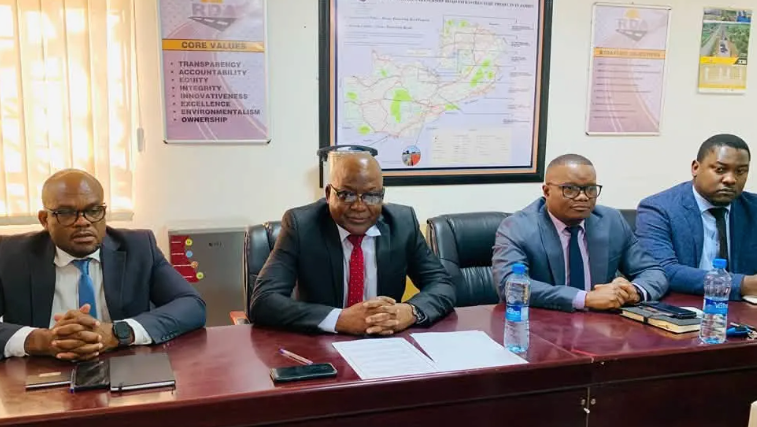
ZIPAR Acting Director of Research, Malindi Msoni, addressed this directly:
“The central challenge is that widespread farming has not, in itself, led to better incomes.”
That statement reflects a critical economic reality.
Farmers do not earn more simply because they grow more.
They earn more when logistics systems reduce losses, connect them to buyers, improve market access and enable participation in higher-value activities like processing, packaging and formal trade.
Without those systems, surplus production often becomes stranded production.
This is especially important in geographically isolated settlements where transport costs and infrastructure deficits already reduce competitiveness.
The same logic applies nationally.
If Zambia succeeds in dramatically increasing maize, wheat and soya production without proportionate investment in logistics systems, the country risks creating larger volumes of poorly connected supply.
That means more post-harvest losses.
More distressed selling.
More transport inefficiencies.
And weaker farmer profitability.
Refugee Settlements as Emerging Economic Corridors
Another key takeaway from the discussions is the growing recognition that refugee settlements should no longer be viewed solely through a humanitarian lens.
They are increasingly functioning as permanent economic communities.
Permanent Secretary for Resettlement in the Office of the Vice-President, Marvis Nkomeshya, emphasized this shift:
“These communities are not transient populations. They are settled communities that farm, trade and contribute to local economies.”
That distinction matters for infrastructure planning.
If settlements are evolving into long-term economic zones, then logistics planning must evolve too.
Road infrastructure, rural warehousing, aggregation systems, transport linkages and digital market connectivity become essential economic investments — not humanitarian add-ons.
Ms Nkomeshya also warned against focusing only on production growth:
“The Government’s commitment to economic inclusion is operational and documented in policy.”
But policy inclusion alone is not enough if market systems remain weak.
The Opportunity for Zambia’s Logistics Sector
The findings also point to a significant opportunity for Zambia’s logistics ecosystem.
There is space for investment in:
- Rural aggregation hubs
- Community warehousing
- Last-mile transport solutions
- Agro-processing facilities
- Digital produce marketplaces
- Cold-chain systems
- Value-chain financing
- Cooperative transport models
Done correctly, these investments could transform refugee settlements and surrounding host communities into viable agricultural growth corridors that support Zambia’s broader agricultural ambitions.
UNHCR External Relations Officer Stephanie Perham reinforced this potential:
“This roadmap is a strategic framework to strengthen resilience, improve food security and build sustainable livelihoods for both displaced people and host communities.”
The bigger insight is this:
Agricultural transformation is no longer just about seeds, fertiliser and land.
It is increasingly about movement.
Movement of goods.
Movement of information.
Movement of finance.
And movement into markets.
Because without logistics, production alone cannot create prosperity.