














Africa Finance Corporation has renewed attention on the US$753 million financing package finalized in December 2025 for the Lobito Atlantic Railway. The deal strengthens the existing Benguela railway and Lobito mineral terminal—but it should not be confused with financing for the proposed greenfield rail connection into Zambia.
The Lobito Corridor did not secure a new US$753 million financing package this month.
What happened instead was more subtle—but equally important.
Africa Finance Corporation’s latest announcement has renewed attention on the financial close for the Lobito Atlantic Railway, a transaction substantially completed in December 2025. In doing so, it has also highlighted a distinction that is often overlooked in discussions about one of Africa’s most strategically significant transport corridors.
The financing secures the existing railway and port infrastructure in Angola.
It does not finance the proposed railway into Zambia.
That distinction matters because the Lobito Corridor is frequently presented as a single, fully financed infrastructure project. In reality, it consists of two interconnected—but financially separate—developments.
The first is the rehabilitation and long-term operation of the existing Benguela Railway and the Lobito mineral terminal.
The second is the proposed greenfield railway that would extend the corridor eastwards into Zambia’s Copperbelt.
The December 2025 transaction largely resolves the first.
The second still awaits its defining financial close.
What the US$753 Million Deal Covers
The financing combines a US$553 million loan from the U.S. International Development Finance Corporation (DFC) with US$200 million from the Development Bank of Southern Africa (DBSA) to support the Lobito Atlantic Railway concession.
It provides long-term capital to rehabilitate, modernize and operate the existing Benguela Railway, which stretches approximately 1,300 kilometres from the Port of Lobito to Luau near Angola’s eastern border, together with the Lobito mineral terminal.
This is fundamentally a brownfield infrastructure transaction.
Rather than building a new railway, the investment strengthens infrastructure that already exists and already carries freight.
The Benguela Railway connects the Atlantic coast to eastern Angola and links into the Democratic Republic of Congo’s rail network, providing an established export route for minerals produced in the Copperbelt region of the DRC.
The financing is expected to improve capacity, reliability and operating efficiency while strengthening the Atlantic gateway that the wider Lobito Corridor depends upon.
What It Does Not Cover
The proposed Zambia–Lobito railway remains a separate project within the greater Lobito Corridor Project.
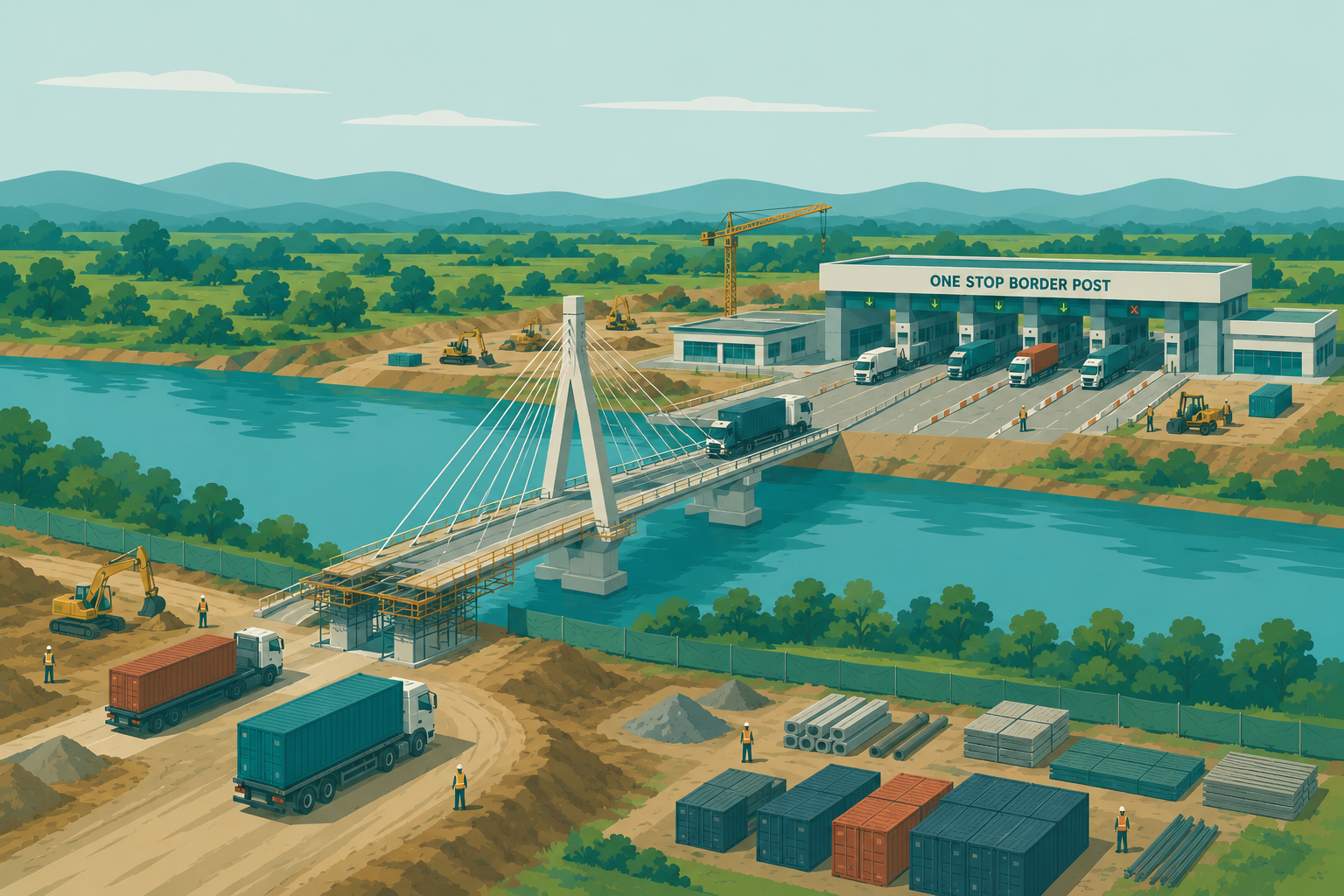
That line would create the missing rail connection between Zambia’s Copperbelt and the Benguela Railway, requiring hundreds of kilometres of new track together with bridges, border infrastructure and associated logistics facilities.
Unlike the rehabilitation of the Benguela Railway, this is a greenfield development.
Africa Finance Corporation has already been appointed lead developer and concession agreements have been signed with the governments of Zambia and Angola.
Those agreements establish the commercial framework for the project.
They are not financial close.
The full lender group and capital package required to construct the railway into Zambia still have to be assembled.
One Corridor, Two Financing Stories
The Lobito Corridor is therefore best understood as two financing stories. One concerns the rehabilitation of an existing railway. The other concerns financing a completely new one. The first has largely been resolved. The second remains ahead.
Related Analysis
The financing architecture behind the Lobito Corridor extends well beyond this latest clarification. Earlier this year, Logistics Now examined what makes a transport corridor sufficiently attractive to secure long-term institutional capital, and why assembling that capital is often as complex as building the infrastructure itself.
Read our earlier analysis: The Makings of a Bankable Corridor: Why AFC’s Lobito Financing Talks Matter for the Corridor’s Sustainable Future.
Understanding that distinction explains why the rehabilitation of an existing railway and the financing of a new cross-border railway should not be viewed as the same investment story.
Why It Matters for Zambia
For Zambia, the strategic prize has always been direct rail access from the Copperbelt to the Atlantic.
The December 2025 financing strengthens the destination infrastructure that would ultimately receive Zambian cargo.
It does not yet create the railway needed to get that cargo there.
Until the eastern extension reaches financial close, Zambia’s connection to Lobito remains a strategic ambition rather than a funded construction project.
A Financed Anchor, Not a Completed Corridor
The December 2025 financial close remains a major achievement.
It provides committed capital for the existing Benguela Railway and the Lobito mineral terminal, significantly strengthening the Atlantic gateway.
What it does not do is complete the wider Lobito Corridor.
That will only happen when the greenfield railway linking Zambia to the existing network secures its own financial close and moves into construction.
Logistics Now Insight
The latest AFC announcement does not mark the financing of the entire Lobito Corridor. It reinforces the financing behind its western anchor. The next defining transaction will not be another announcement about Angola. It will be the financial close that finally funds Zambia’s rail connection to the Atlantic.