











Hormuz, Copper and the Kwacha: The Three Signals Behind Zambia’s July Fuel Relief.
Zambia’s July pump-price revision is more than a monthly fuel adjustment. It is a live demonstration of the three signals that now sit underneath the country’s logistics cost base: international fuel prices, copper-backed currency strength, and the Kwacha exchange rate.
For transporters, miners, distributors and cargo owners, the July reduction offers welcome relief. Petrol moved to K26.15 per litre, diesel to K28.11, kerosene to K28.32, and Jet A-1 to K30.27. But the deeper story is not simply that fuel became cheaper. It is why the reduction became possible. The Energy Regulation Board’s review points to lower international fuel prices and exchange-rate movements as key drivers of the July adjustment.
This is where the trichotomy matters.
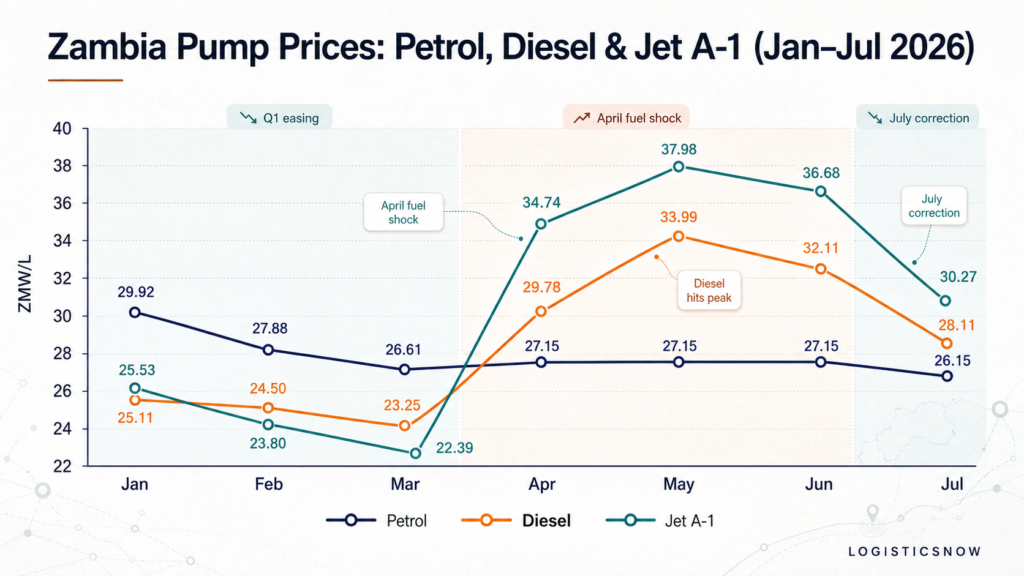
The first signal is global oil. Zambia does not control international crude or refined-product prices. When geopolitical risk rises around critical chokepoints such as the Strait of Hormuz, global fuel markets respond quickly. Hormuz remains one of the world’s most important energy corridors, with the EIA estimating that oil flows through the strait averaged 20.9 million barrels per day in the first half of 2025, equivalent to about 20% of global petroleum liquids consumption.
That is why a conflict in the Gulf can show up in the operating cost of a truck on the Copperbelt, a bus on the Great North Road, or a fuel tanker heading inland from a port corridor. The connection is not always physical. It is priced through global energy markets.
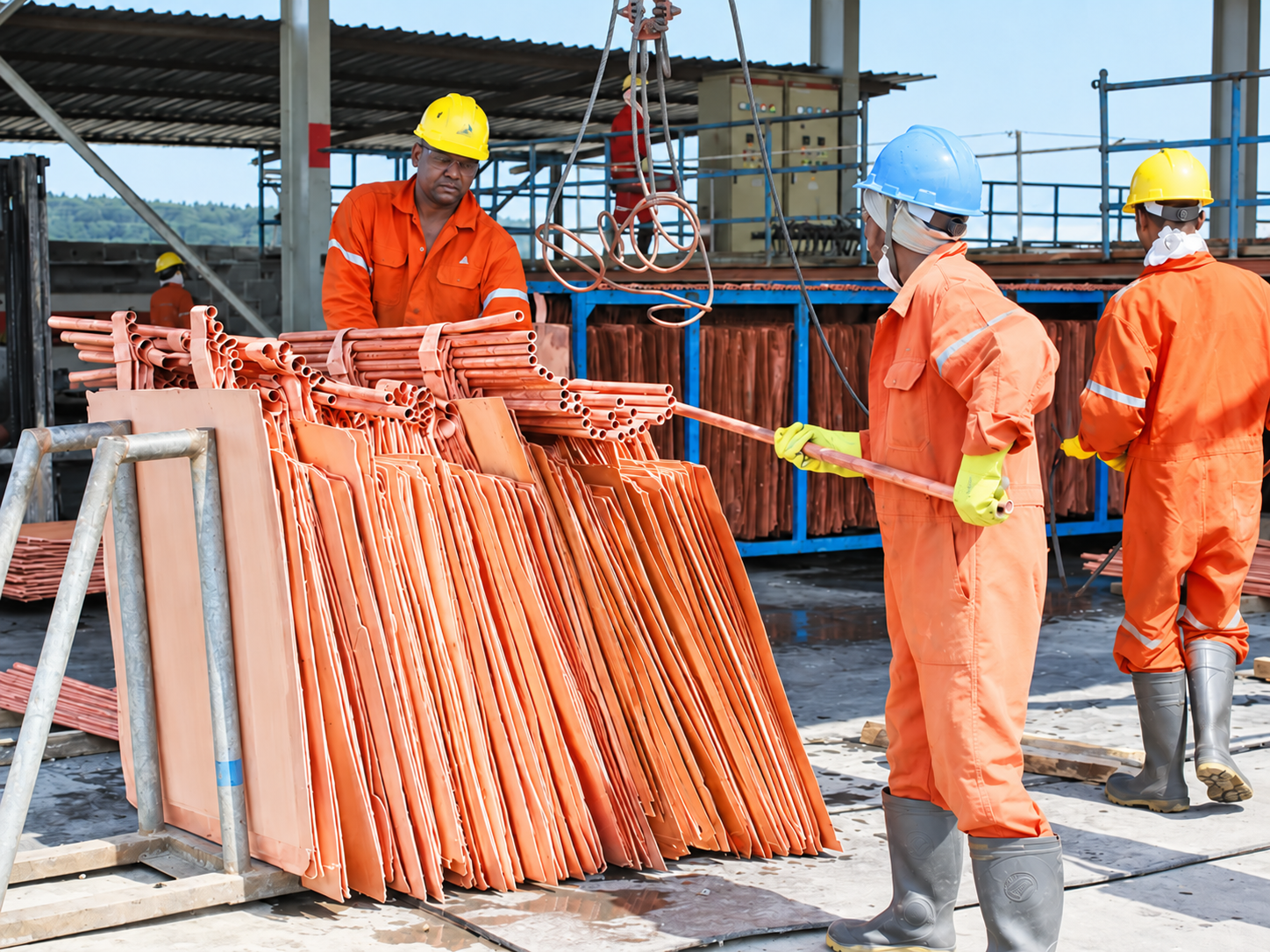
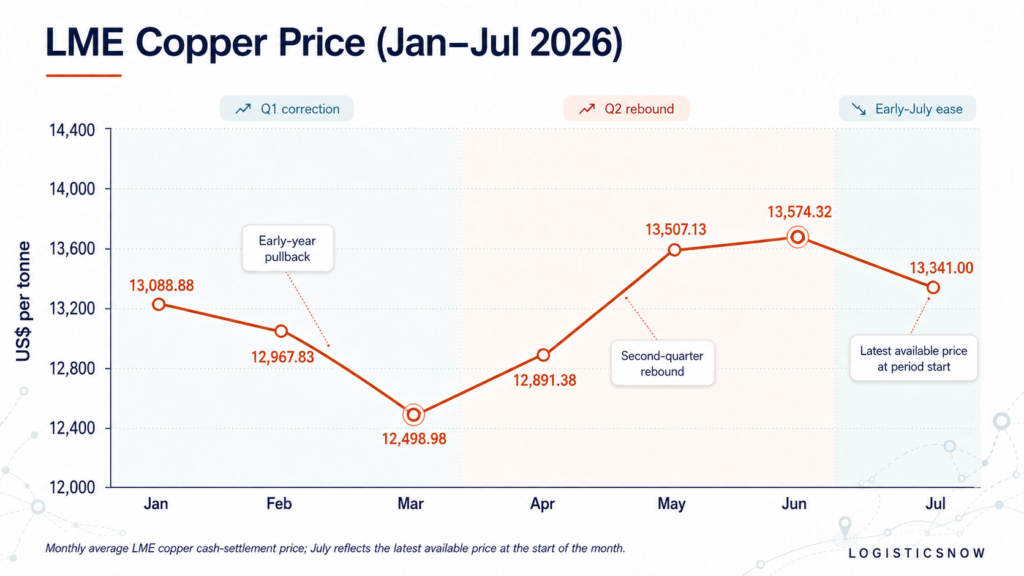
The second signal is copper. Copper is Zambia’s main foreign-exchange engine. When copper prices are strong, mining-sector inflows improve dollar liquidity and support confidence in the Kwacha. Reuters reported in June that the Kwacha was expected to gain ground on the back of robust copper prices, supportive central-bank policy and positive market sentiment.
The third signal is the Kwacha itself. Because fuel is priced internationally but consumed locally, the exchange rate determines how much of the global fuel cost is transmitted into Zambia’s pump price. A weaker Kwacha magnifies imported fuel pressure. A stronger Kwacha cushions it.
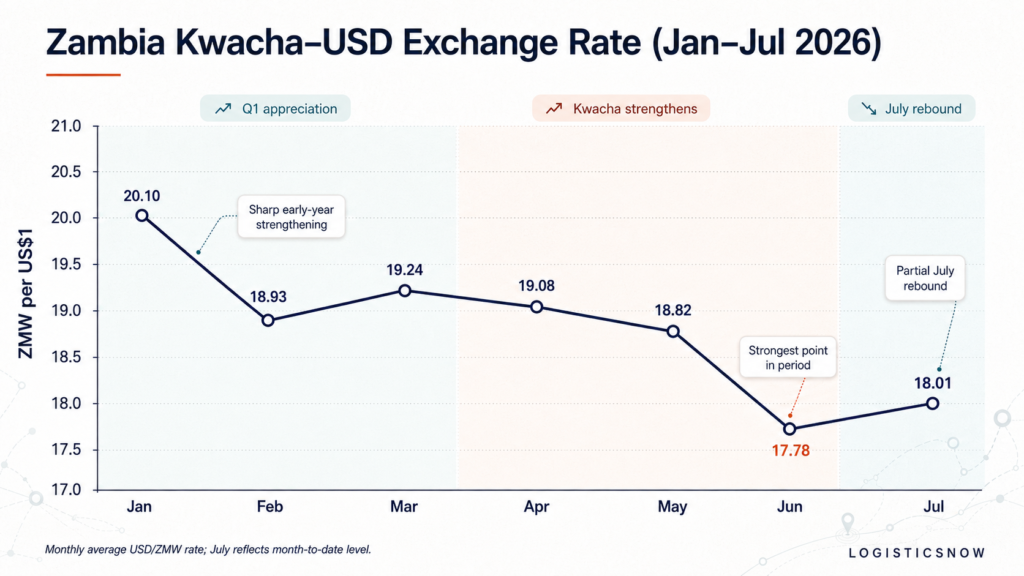
The July revision is therefore what happens when two favourable signals arrive at the same time: international fuel prices ease, while a copper-supported Kwacha helps reduce the local currency cost of imported energy.
For Zambia’s logistics sector, this matters because diesel is not just another commodity. It is embedded in freight rates, mine supply chains, FMCG distribution, agricultural transport, bus operations, construction logistics and cross-border trade. A reduction in diesel gives operators breathing room, but it does not automatically reset the sector’s cost base. Tyres, spares, finance costs, maintenance, insurance, delays and border inefficiencies remain part of the wider operating burden.
The larger lesson is that Zambia’s logistics economy is globally exposed but locally translated. Hormuz moves the oil signal. Copper supports the currency signal. The Kwacha converts both into the pump-price signal.
That is the trichotomy of Zambia’s logistics cost base — and July’s pump-price reduction is its clearest recent expression.