

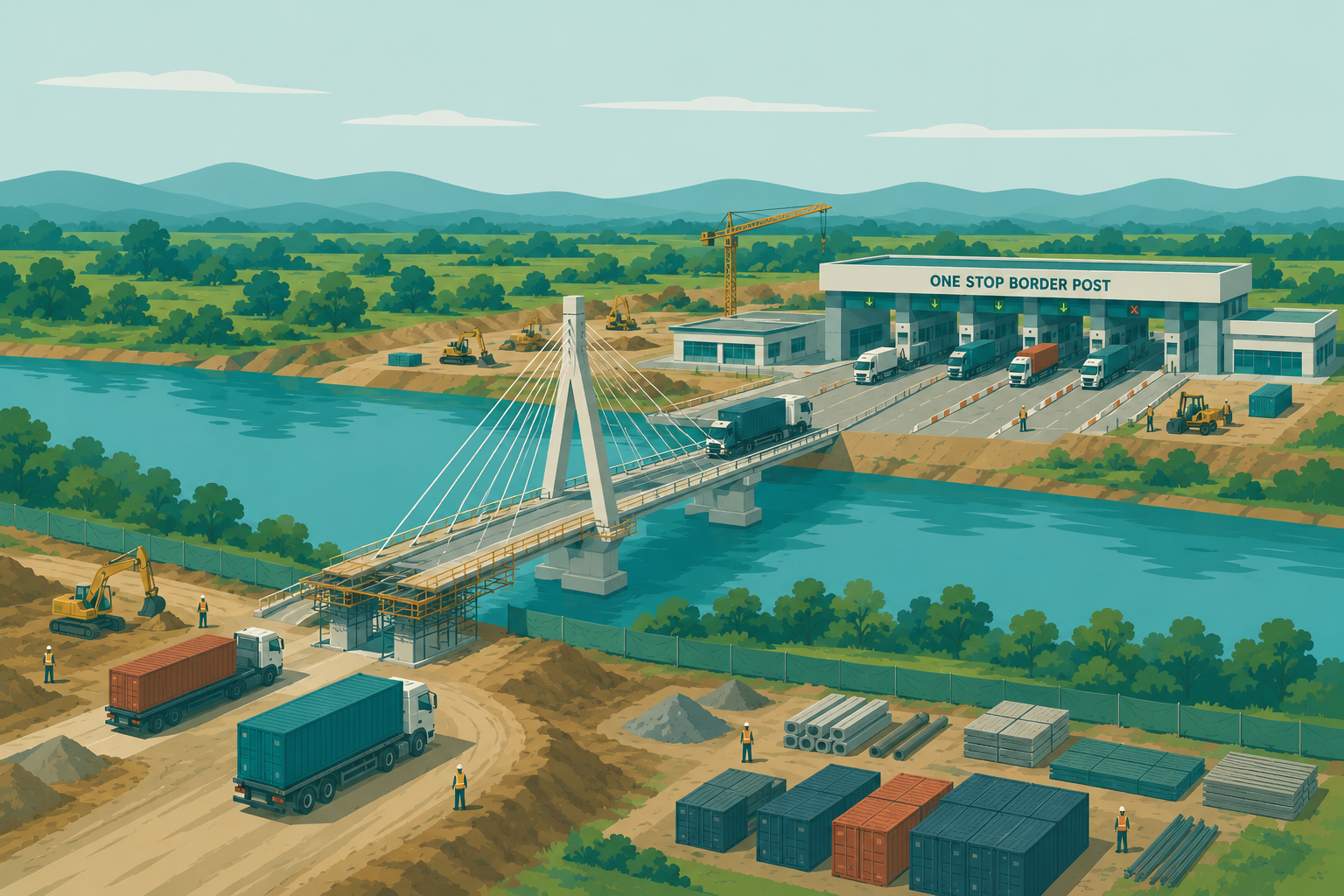




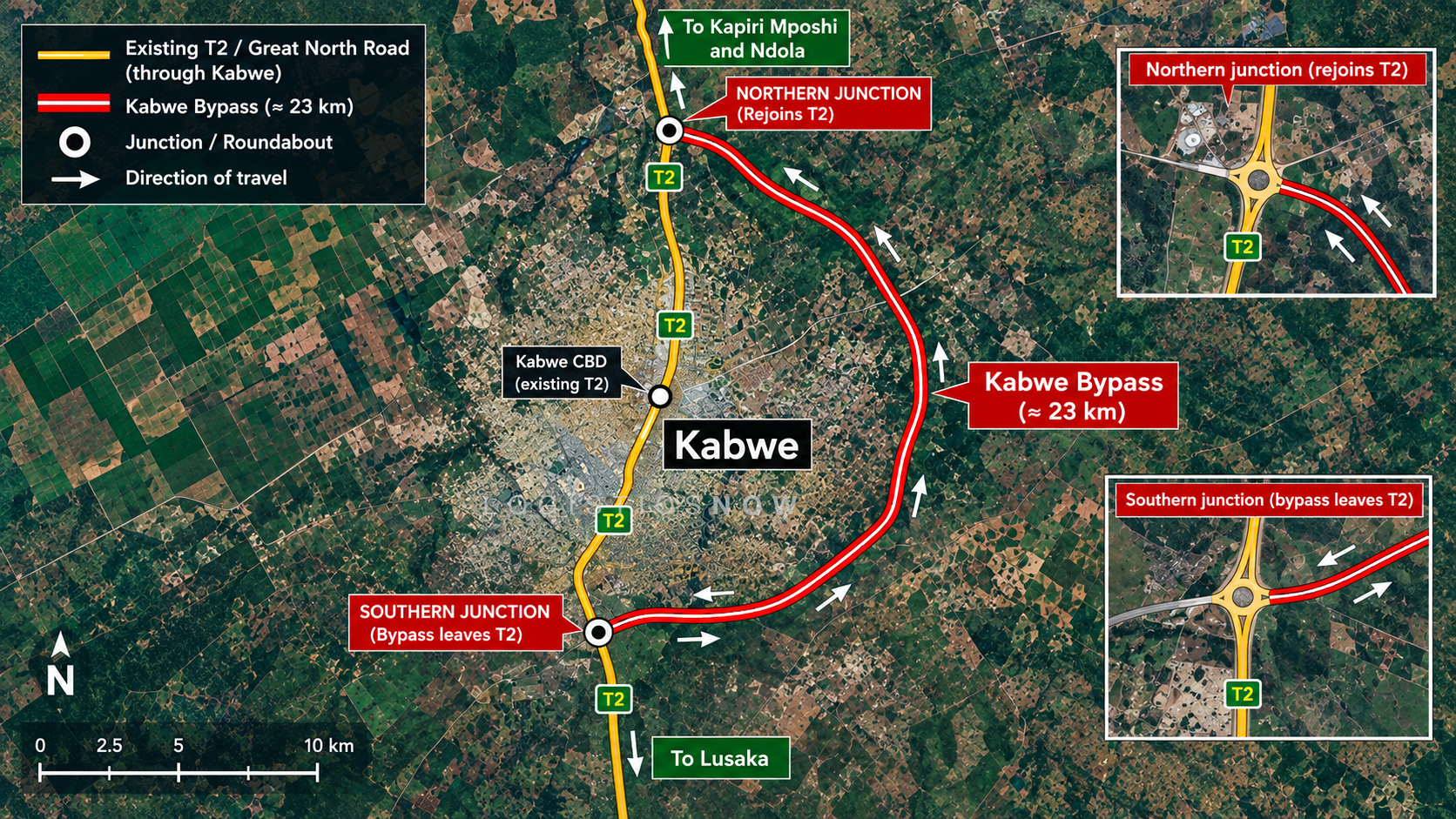
The 23-kilometre Kabwe Bypass in Zambia has been opened, giving heavy and through-traffic a new route around the city as the country progressively removes two major urban choke points from the Lusaka-Copperbelt corridor.
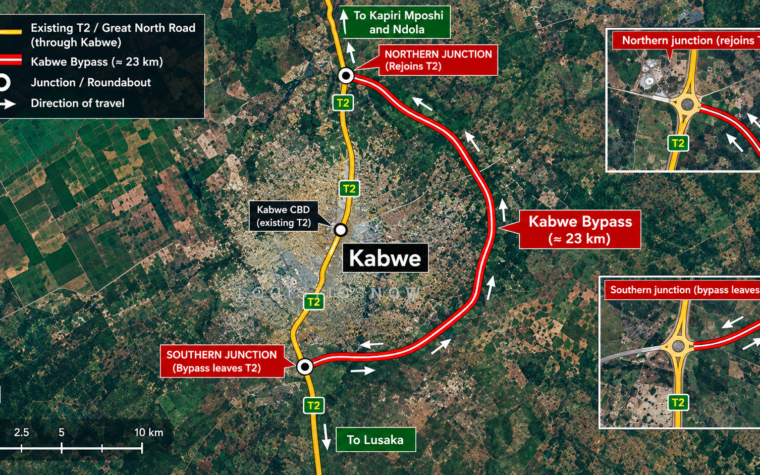
The new road branches away from the T2 at Ulemu on the Chiwala side south of Kabwe, swings around the eastern edge of the city and reconnects with the Great North Road at Chindwin north of town.
That creates a simple traffic split.
Kabwe-bound vehicles can stay on the existing T2. Heavy trucks and other through-traffic can take the bypass.
It matters because Kabwe has long been one of the urban choke points sitting directly on Zambia’s main north-south road artery, forcing local traffic and long-distance freight onto the same road.
And Kabwe is not the only choke point being taken out of the equation.
The Kapiri Mposhi Bypass is already open, diverting through-traffic away from another busy town centre further north.
Together, the two bypasses begin removing two major urban interruptions from the road linking Lusaka to the Copperbelt and onwards into Zambia’s regional trade network.
The wider Lusaka-Ndola Dual Carriageway is being delivered as a US$649.98 million Public-Private Partnership with MOIC-LN, under a 25-year concession: three years of construction followed by 22 years of operations and maintenance.
The concessionaire remains responsible for the corridor long after construction is completed, creating a commercial incentive to keep the road in reliable operating condition rather than allowing the asset to deteriorate before another major rehabilitation.
For freight operators, that could be as important as the additional road capacity itself.
The LN signal
Kabwe bypass + Kapiri Mposhi bypass + dual carriageway + 22 years of contracted maintenance changes the logistics proposition on Zambia’s most important north-south road corridor.
The real test will be whether removing these choke points produces shorter and more predictable Lusaka-Copperbelt truck journeys, lower vehicle operating costs and better fleet utilisation.
That is where a road project becomes logistics infrastructure.