






South African pharmacy chain Clicks is electrifying its distribution fleet, but the bigger story may be the infrastructure, partnerships and operating model being built around the trucks.
South African pharmacy chain Clicks is moving to operate what it says will be Africa’s first retail distribution centre with a fully electric truck fleet, offering an important glimpse into how the electrification of commercial logistics could develop across the continent.
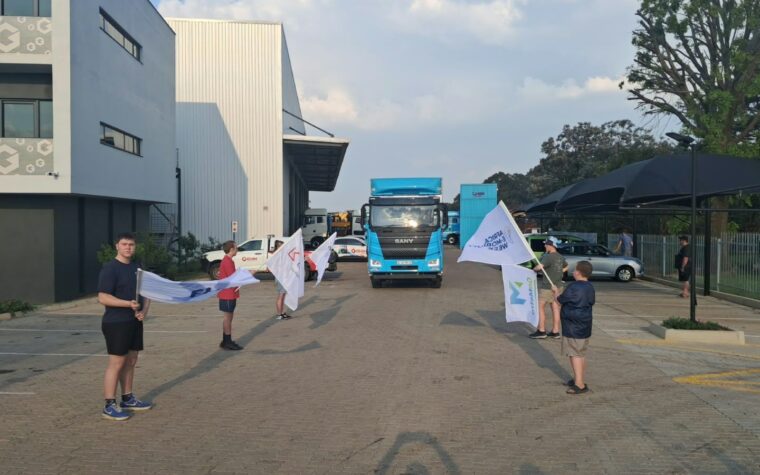
The retailer has secured 30 new-generation SANY heavy-duty electric trucks for deployment across its Cape Town and Centurion distribution operations. The first 14 will operate from its Montague Gardens distribution centre in Cape Town, with another 14 scheduled for deployment at Centurion by 1 October. Montague Gardens is expected to become fully electric by the end of October.
For a retailer of Clicks’ scale, this is significant. The company operates more than 1,000 stores across southern Africa and has built a sizeable distribution network behind its retail footprint. Electrifying part of that network therefore moves the conversation beyond small EV trials and towards the practical deployment of electric vehicles within a large commercial logistics operation.
Clicks Logistics Executive Pieter Strydom framed the transition in operational rather than purely environmental terms.
“A smarter, greener and more resilient supply chain is not a future aspiration for Clicks Logistics – it is already a reality.”
It is not just about the trucks
Behind the vehicles sits another important part of the story: South African energy technology company Zimi.
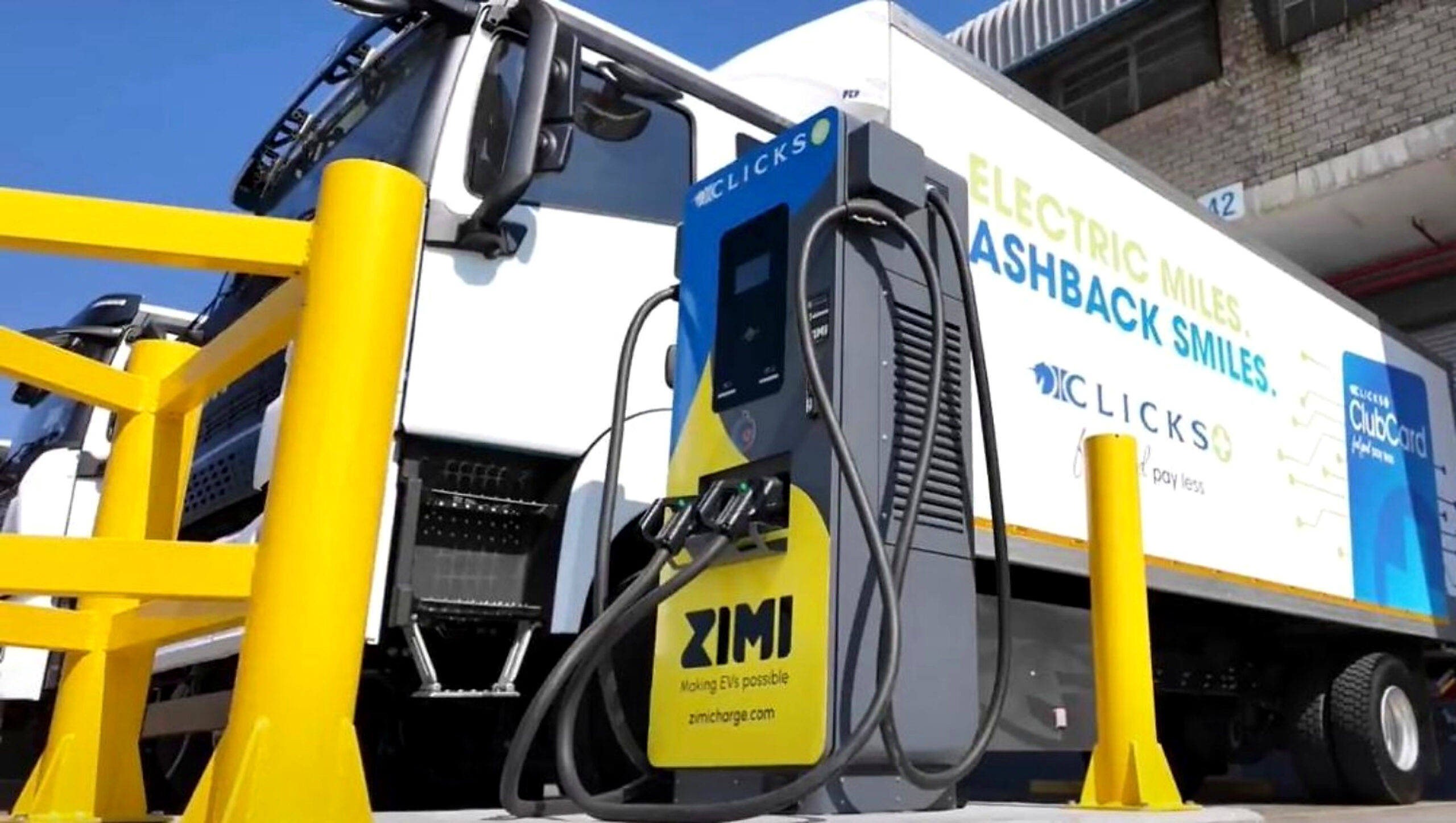
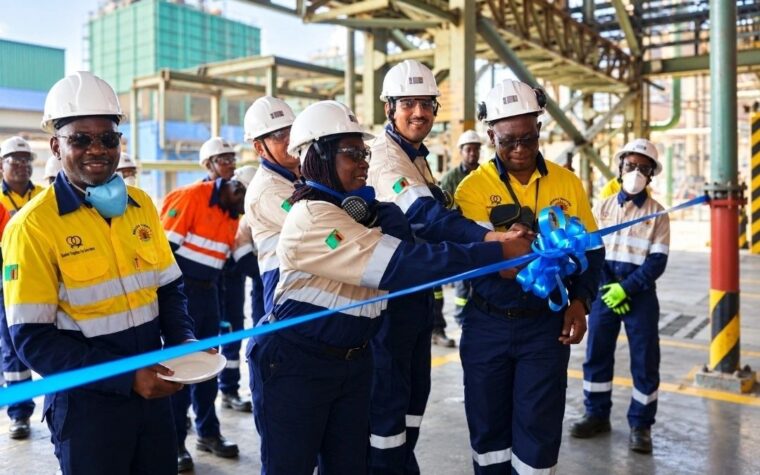
Zimi has partnered with the Clicks logistics team to provide the charging infrastructure required to keep the fleet operating. Speaking at the Clicks Montague Gardens distribution centre, Zimi CEO and co-founder Michael Maas described the project as an ecosystem effort involving multiple players.
“This really is a massive initiative with a lot of partners in the ecosystem coming together from finance, OEMs and 3PLs to make sure that this fleet runs,” Maas said during the launch event at the facility.
That may ultimately be the most important lesson from the Clicks project.
Electrifying a logistics fleet is not simply a matter of replacing a diesel truck with an electric one. The vehicle needs charging infrastructure. That infrastructure needs sufficient and reliable electricity. Charging has to fit around dispatch schedules, routes and vehicle utilisation, while the economics still have to make sense against the diesel fleet being replaced.
Clicks is effectively building that ecosystem around the vehicle. Its electric trucks can draw electricity from a combination of solar generation, battery storage and the grid, while transport management technology is being used to coordinate routing, vehicle utilisation, charging and fleet performance.
The economics are becoming difficult to ignore
The economics behind the rollout provide another reason the project deserves attention.
Clicks says the initial 30-truck fleet is expected to save approximately 780,000 litres of diesel every year, translating into projected annual fuel savings of between R20 million and R25 million. The company expects a further R2 million to R3 million in annual maintenance savings, while avoiding approximately 2,000 tonnes of tailpipe carbon dioxide emissions each year.
The SANY electric trucks have 318 kWh batteries, an estimated range of 380 to 400 kilometres per charge and an 11.5-tonne payload. DC fast charging can take the batteries from 20% to 80% in approximately 30 minutes, while each truck is expected to travel between 110,000 and 120,000 kilometres annually.
Clicks has invested more than R65 million in solar generation, battery storage and charging infrastructure to support the transition, while its third-party logistics partners have secured the electric trucks.
At that level of utilisation, electrification starts becoming more than an environmental conversation. It becomes a question of operating economics.
The numbers are projections rather than realised savings, but they point towards an important shift in commercial transport: the question is increasingly moving from whether electric trucks can work to which routes, fleet profiles and operating environments can already make economic sense for electrification.
A new operating model is emerging
That is where the Clicks project becomes especially relevant from a regional logistics perspective.
The transition to electric commercial transport is unlikely to happen evenly across every route or vehicle class. Long-haul freight will present a different challenge from urban distribution. Cross-border trucking will require different infrastructure from depot-based retail fleets. Mining, industrial, municipal and FMCG operations will each have their own duty cycles and economics.
The earliest opportunities are therefore likely to emerge where vehicle movements are predictable and the energy environment can be controlled.
Depot-based fleets are particularly important in this respect. Vehicles leave from known locations, operate defined routes and return to the same infrastructure. Charging can be planned around dispatch windows, while energy generation and storage can be designed around the actual requirements of the fleet.
This changes the nature of the EV conversation.
The competitive advantage may not lie in simply owning an electric truck. It may lie in the ability to integrate vehicles, charging, energy, software, finance and operations into one functioning logistics system.
That is what makes the Clicks and Zimi partnership particularly interesting.
It suggests that Africa’s electric logistics transition could be built less around standalone charging stations and more around integrated fleet ecosystems, where operators control both the movement of vehicles and the infrastructure that powers them.
And as the economics continue to improve, that model could become increasingly relevant across retail, FMCG, mining, industrial distribution and urban logistics markets throughout the region.
The transition may not begin everywhere at once. It may begin one depot, one fleet and one commercially viable route at a time.