



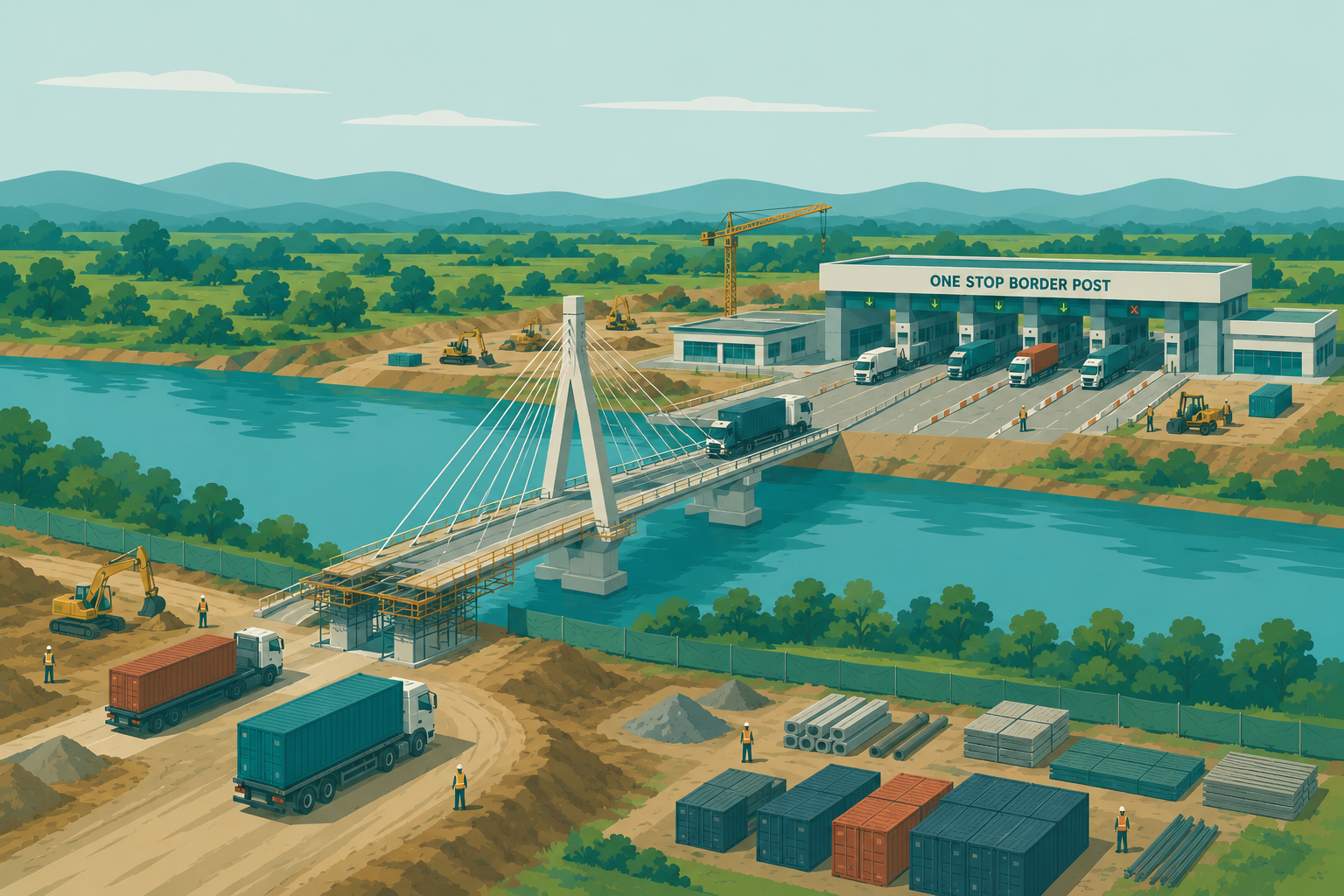







Zimbabwe’s talks with China over minerals-backed road and rail financing point to a bigger regional shift: Southern Africa’s critical minerals are no longer just moving through corridors. They are increasingly shaping how those corridors are financed.
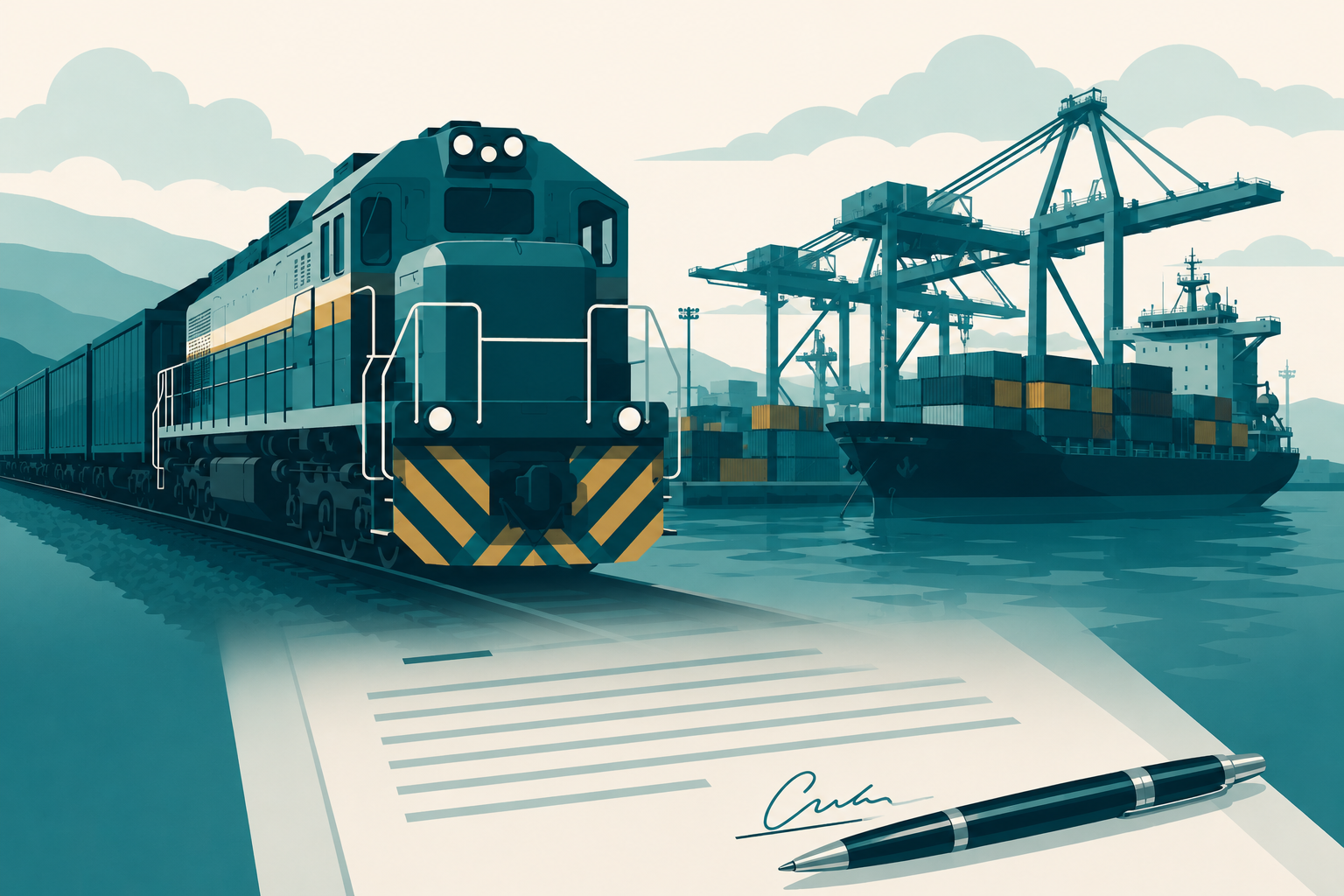
Zimbabwe is exploring resource-backed financing with China to fund road and rail infrastructure, using future mineral revenues to support repayment.
At first glance, this is a Zimbabwe financing story.
But for Zambia and the wider Southern African logistics market, it is much more than that. It is another sign that critical minerals are beginning to shape not only what the region exports, but how the infrastructure around those exports is financed, prioritized and operated.
Critical minerals are no longer only shaping what Africa exports. They are shaping how roads, railways, ports and borders are financed, prioritized and operated.”
Zimbabwe’s Finance Minister, Mthuli Ncube, has indicated that discussions have begun with China Railway, with transport infrastructure identified as a priority. The proposal comes as Zimbabwe seeks to modernize roads and railways that are central to its mining, industrial and export ambitions.
The country’s infrastructure needs are substantial. The African Development Bank has estimated that Zimbabwe requires about US$34 billion to modernize its infrastructure, particularly the transport and logistics systems. For a country that has become one of Africa’s most important lithium producers, the link between minerals and infrastructure is increasingly difficult to ignore.
Lithium is not only a mining story. It is a logistics story.
Mines need roads. Processing plants need power, water, chemicals, storage, industrial land and reliable export routes. Exporters need border efficiency, warehousing, customs systems and access to regional ports. Without that supporting infrastructure, the promise of mineral beneficiation becomes difficult to convert into commercial value.
That is why Zimbabwe’s proposed financing model matters.
The country appears to be asking a practical question: can future mineral revenues help finance the infrastructure needed to make those same minerals more competitive?
For Zambia, the question is highly relevant.
Zambia is positioning itself around copper, critical minerals, regional trade and corridor development. The country is already part of several major logistics conversations: the Lobito Corridor to the west, TAZARA and Dar es Salaam to the east, the North-South Corridor through Zimbabwe and South Africa, and regional links into Mozambique, Botswana and the DRC.
Each of these routes is competing for reliability, cost efficiency and cargo volumes.
The lesson from Zimbabwe’s talks is not necessarily that Zambia should copy the same financing model. Resource-backed infrastructure finance can unlock investment, but it must be governed carefully. Poorly structured arrangements can expose future revenues without delivering the expected logistics gains.
The bigger lesson is that infrastructure strategy and mineral strategy can no longer be treated separately.
A mine without an efficient corridor is exposed to high freight costs, delays and weaker margins. A corridor without sufficient cargo demand struggles to justify investment. The opportunity lies in aligning mineral output, infrastructure finance and logistics operations into one coherent system.
This is where Zambia’s corridor agenda becomes important.
The Lobito Corridor offers an Atlantic-facing route for copper and cobalt-linked supply chains. TAZARA remains a strategic eastern outlet through Tanzania. The North-South Corridor continues to carry significant regional freight. But the success of these routes will depend less on geography alone and more on execution: rail reliability, road quality, border performance, warehousing capacity, customs efficiency and private-sector participation.
For logistics operators, the implications are practical.
Improved corridors create demand for truck parking, bonded warehousing, fuel supply, maintenance services, customs brokerage, inland terminals, cold-chain facilities, digital cargo visibility and industrial logistics support.
But they also create competition.
If Zimbabwe improves its road and rail performance, it could strengthen its role in regional transit and mineral logistics. If Angola strengthens Lobito, westward freight patterns may grow. If Tanzania and Zambia modernize TAZARA, eastern access becomes more competitive. If Mozambique expands rail-port efficiency, Beira and Nacala become stronger alternatives.
Southern Africa’s corridor race is already underway.
The winners will not simply be the countries with the richest mineral deposits. They will be the countries that can move minerals efficiently, process more value locally, finance the infrastructure around them and build strong logistics systems along the route.
For Zambia, the opportunity is clear.
The country must move beyond being a land-linked transit point and become a logistics and industrial services platform.
That means thinking about corridors not only as export routes, but as value corridors: routes that support mining, agriculture, processing, warehousing, industrial supply chains and local service providers.
Zimbabwe’s talks with China may still be early-stage.
But the direction of travel is clear: critical minerals are becoming infrastructure currency.
And for Zambia, that is a story worth watching closely.
Why It Matters
This matters because Zambia is developing its own corridor strategy in a region where neighbouring countries are also competing for mineral cargo, infrastructure finance and logistics investment. Zimbabwe’s minerals-backed infrastructure discussions show how closely critical minerals, rail, road, ports and industrial development are becoming linked. For Zambia, the key question is how quickly corridor projects such as Lobito, TAZARA and strategic Copperbelt routes can be converted into efficient, commercially reliable logistics systems.