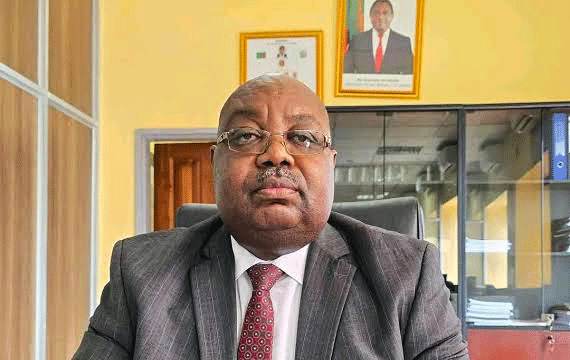




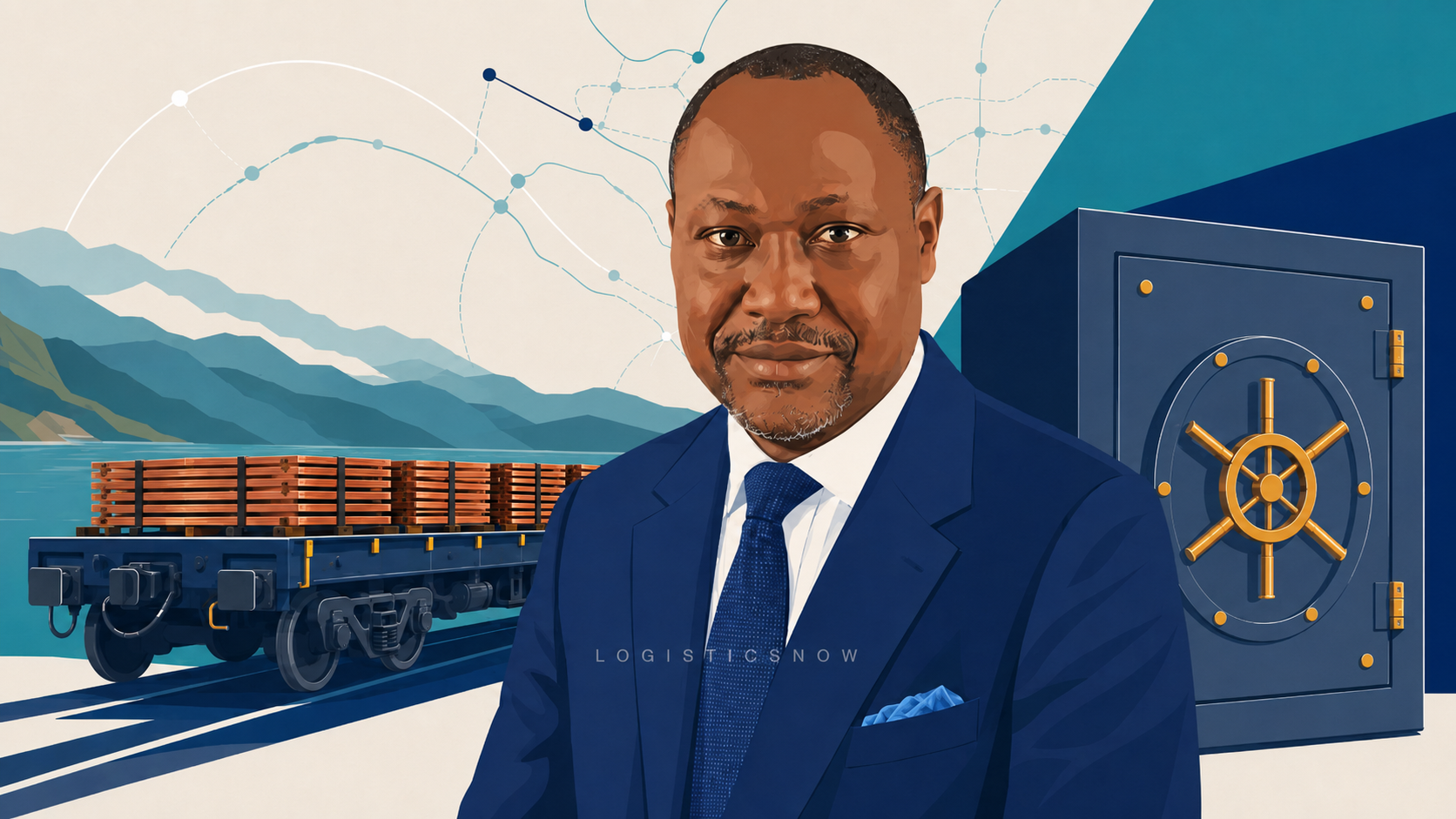



Zambia Railways Limited has announced the departure of Managing Director Cuthbert Malindi by mutual consent, bringing a leadership change at the state railway at a critical point in Zambia’s push to rebuild rail capacity and strengthen connections to regional trade corridors.
Malindi’s separation took effect on Thursday, 17 September 2026. Company Secretary Mwendabai Mwalusi-Bulaya has been appointed Acting Managing Director, with the Board saying the appointment is intended to ensure continuity in the management and operations of Zambia Railways Limited.
The Board did not disclose the reasons for the separation and said further developments regarding the company’s leadership would be communicated in due course.
A railway in transition
Malindi leaves as ZRL pursues an ambitious programme to rebuild its operational capacity.
In March, the railway appointed Pangaea Securities as transaction advisor to raise US$60 million from development finance institutions and the private sector, complementing a €50 million European Union grant for rehabilitation of critical sections of track, signalling and communications infrastructure. ZRL’s 2024–2028 Strategic Business Plan targets an increase in annual freight haulage from 800,000 tonnes in 2024 to 2.6 million tonnes by 2028.
ZRL is also undertaking a US$20 million programme to refurbish six GT36 locomotives, which the company says will increase haulage capacity and reduce its reliance on hired locomotives.
At the same time, Malindi’s tenure coincided with a renewed push by Zambia Railways to strengthen its integration with regional railway systems.
In May 2025, ZRL held talks with TAZARA, Zambia Cargo and Logistics and Malawi Cargo Centre in Dar es Salaam aimed at improving cooperation in railway operations, cargo handling and cross-border logistics along the Dar es Salaam Corridor. The discussions included opportunities for joint projects and improving regional rail connectivity.
Another major corridor initiative followed in April 2026, when ZRL signed a Memorandum of Understanding with Central East African Railways/Nacala Logistics to operationalise the Chipata-Mchinji railway line. The connection provides Zambia with a rail gateway through Malawi to the Port of Nacala in Mozambique and is intended to support increased movement of commodities including fuel, fertiliser, copper, coal and wheat.
Why it matters
The leadership transition comes as investment in the railway systems surrounding Zambia accelerates.
Following the signing of the US$1.4 billion TAZARA revitalisation agreement in September 2025, ZRL itself warned that rehabilitation of its infrastructure and operations was becoming increasingly urgent to ensure the domestic network did not become a bottleneck within the wider regional transport system. That challenge remains.
For Zambia Railways, the immediate issue is therefore not simply who occupies the Managing Director’s office, but whether the momentum behind infrastructure rehabilitation, rolling-stock recovery, freight growth and regional rail integration is maintained through the leadership transition.
What to watch: who is ultimately appointed to lead ZRL, and whether the railway remains on course to deliver its rehabilitation programme and significantly increase freight volumes as Zambia’s surrounding rail corridors attract new investment.