











Zambia’s universities and colleges can teach the principles of logistics. But industry must help young professionals understand how those principles work in the real world.
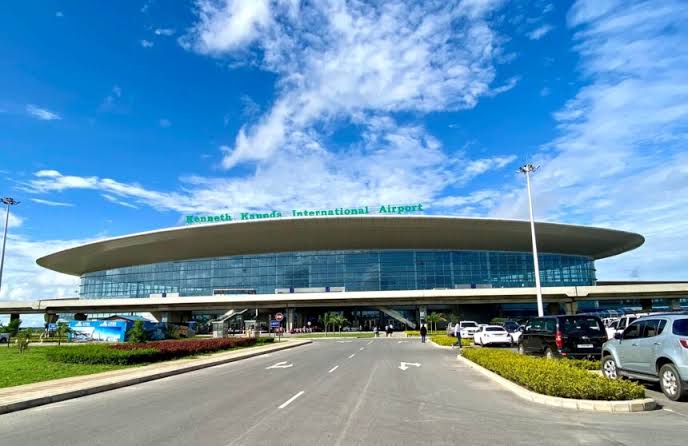
On 11 September 2026, 45 students drawn from the University of Zambia, Chalimbana University, ZCAS University, the Zambia Institute of Marketing and the Zambia Centre for Professional Institute Training visited Kenneth Kaunda International Airport for practical exposure to one of the country’s most important transport and logistics environments.
The educational tour was coordinated through the Zambia Chartered Institute of Logistics and Transport (ZCILT) Next Generation – Midlands and hosted by Zambia Airports Corporation Limited.
Students visited the airport fire station, observed baggage sorting operations and were exposed to the airside and runway environment, gaining a closer look at some of the systems, people and processes required to keep an airport operating.
But, the significance of the visit goes beyond a single educational tour. It raises a bigger question for Zambia’s transport and logistics sector: how involved is industry in preparing the people it will need tomorrow?
Seeing the system behind the theory
Logistics is ultimately an operational discipline.
Warehouses, airports, border posts, distribution centres, trucking fleets, rail terminals and manufacturing plants are interconnected systems involving people, equipment, processes, technology and regulation.
Students can learn the principles in a lecture room. Seeing those principles applied in a live operating environment provides a different level of understanding.
At an airport, for example, the movement of a passenger’s bag may appear simple from the outside. Behind it sits a coordinated chain involving check-in, screening, sorting, handling, loading, aircraft turnaround procedures and security controls.
The same applies across the wider logistics industry.
A warehouse is more than a building containing stock. A truck is part of a much larger transport operation. A border crossing is part of an international trade system. A railway terminal is a link in a supply chain.
Exposure helps students begin to see those connections.
Industry has a role to play
Companies frequently talk about skills shortages and the difficulty of finding young professionals with sufficient practical understanding of operational environments.
But developing that capability cannot be left entirely to universities and colleges.
Industry has a role to play too.
And that does not always require a large internship programme.
A company can host students for a morning. A fleet manager can explain how a transport operation is controlled. A warehouse can demonstrate receiving, inventory management and dispatch. A customs operator can explain border processes. A freight forwarder can demonstrate how cargo moves across multiple jurisdictions. An airline or airport operator can expose students to cargo, ground handling and aviation operations.
These interventions may appear small, but they help students connect what they are learning with the industry they are preparing to enter.
They also give employers an opportunity to interact with potential future talent much earlier.
From exposure to opportunity
Exposure, however, is only one part of the equation.
The next step is creating clearer pathways from education into industry.
Industrial attachments, internships, apprenticeships, graduate trainee programmes and entry-level positions give young professionals an opportunity to convert academic knowledge into practical capability.
For employers, they provide a structured way to identify and develop talent.
This is one reason Logistics Now is expanding its Opportunities platform beyond conventional job vacancies.
Companies can publish jobs, internships, industrial attachments, graduate programmes, apprenticeships, training opportunities and other pathways into Zambia’s transport, logistics, trade and supply chain ecosystem.
For students and young professionals, the objective is to make these opportunities easier to discover.
For industry, it creates another practical way to participate in developing the people who will eventually manage Zambia’s supply chains.
Open your doors to the next generation
The visit to Kenneth Kaunda International Airport offers a simple example of what can happen when industry opens its doors.
As Zambia expands its transport infrastructure, strengthens regional trade corridors and develops increasingly sophisticated supply chains, the sector will need people capable of operating those systems.
Building that workforce starts long before the first full-time job.
It starts with exposure. It grows through practical experience. And it requires stronger connections between education and industry.
For companies across Zambia’s transport and logistics ecosystem, the invitation is simple: open your doors to the next generation.