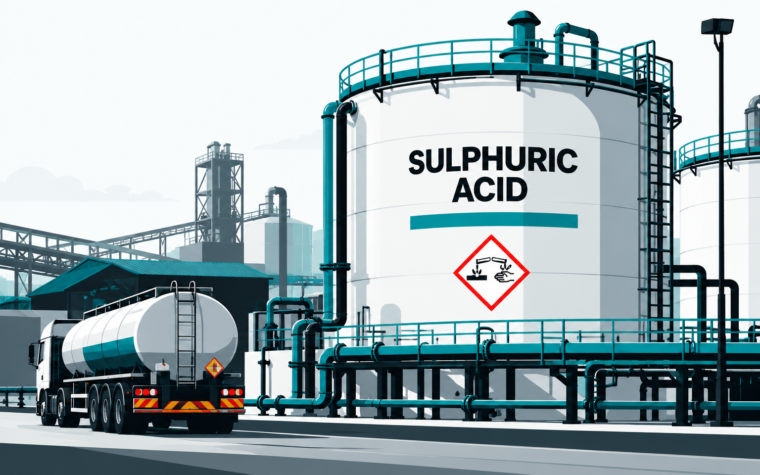
















Zambia’s push for higher copper production is exposing a less visible constraint in the mining supply chain, with tightening sulphuric acid availability pushing costs sharply higher and disrupting some processing operations.
Jubilee Metals says domestic sulphuric acid availability fell significantly during the final quarter of its 2026 financial year, pushing its acid costs up by more than 200%.
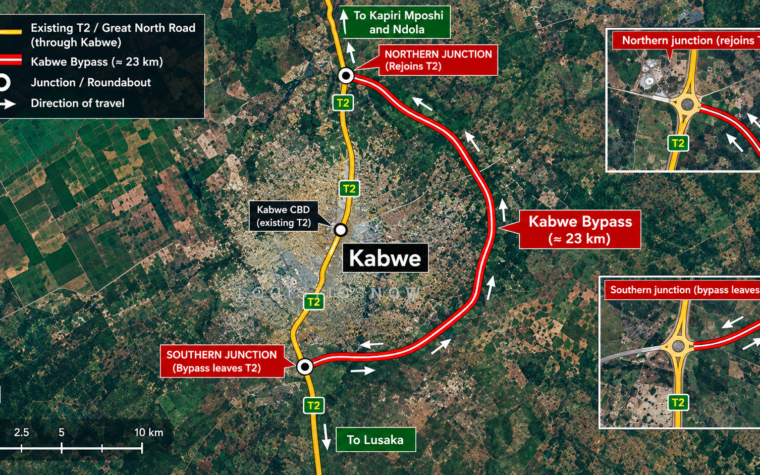
The shortage had a marked impact on production at its Sable Refinery in Kabwe, while Jubilee says tighter acid and diesel supplies have also contributed to temporary closures at other metal processors in its operating area.
That makes sulphuric acid more than a chemical-input story.
It is becoming a copper supply-chain story.
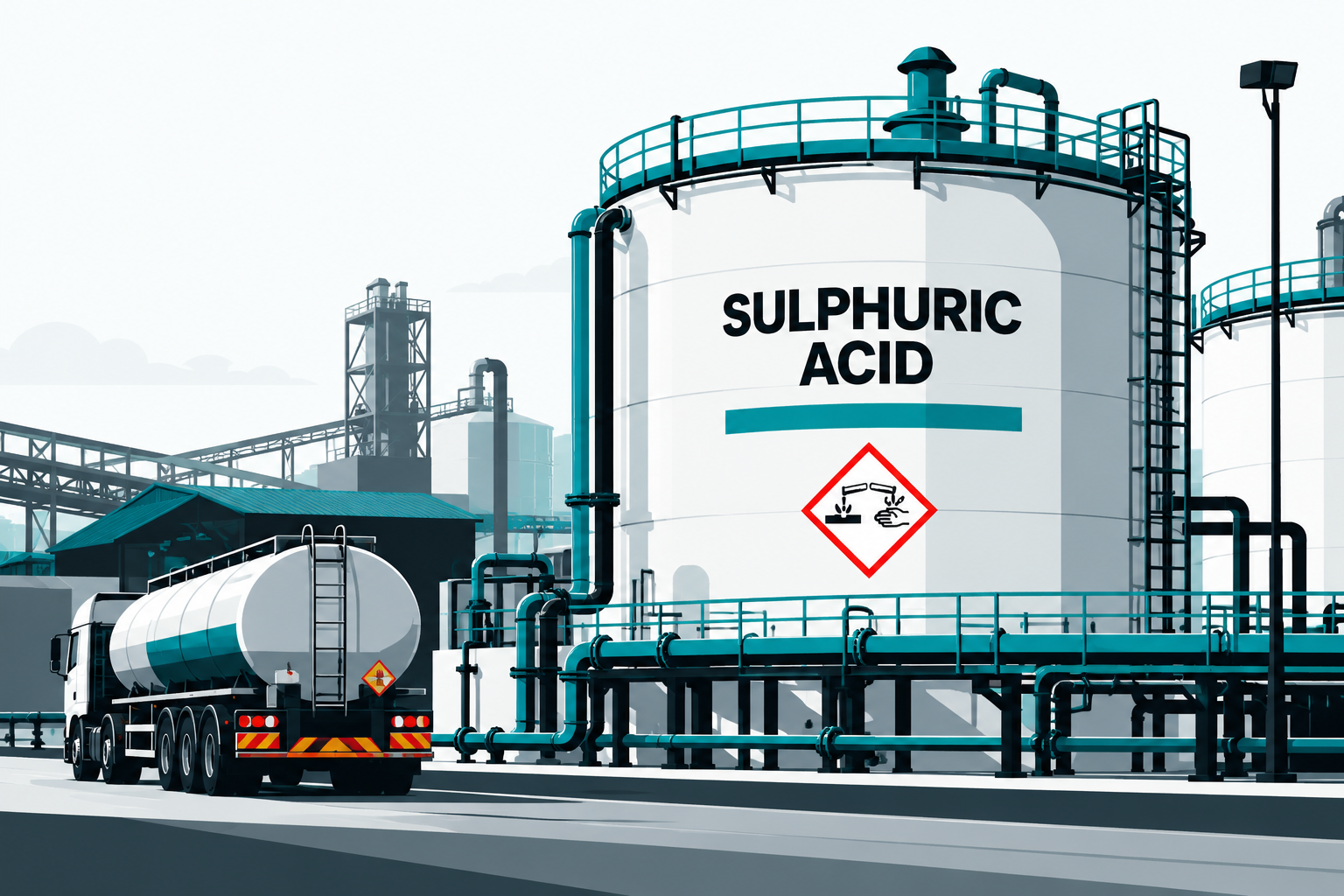
Sulphuric acid is a critical input in processing oxide copper ores. Zambia’s smelters produce around 2 million tonnes annually, largely as a by-product, with domestic mines consuming much of that production and surplus traditionally moving across the border into the DRC.
In 2024 alone, Zambia exported approximately 479,000 tonnes of sulphuric acid to the DRC, making Zambia by far its largest external supplier.
But Zambia’s own demand has tightened that equation.
Government banned sulphuric acid exports in September 2025 after shortages emerged, before replacing the outright restriction with a controlled export permit system in March 2026 designed to protect supplies for local industry.
By May, improved stocks allowed selected producers to resume limited exports to the DRC.
The latest pressure reported by Jubilee suggests the balance remains fragile.
There is also a logistics dimension.
Jubilee has previously indicated that acid represents around 20% of monthly costs at its Roan operation, while transport accounts for another 16%.
That means where acid is produced, how far it must travel, who gets priority and whether Zambia eventually requires additional imported supply could increasingly affect copper-processing economics.
The LN signal
Zambia’s copper expansion is usually discussed in terms of mines, power, roads and railways.
But producing more copper also means securing the industrial inputs needed to process it.
As new mines and processing capacity come online, Zambia will need enough sulphuric acid to support its own growing Copperbelt while managing demand from the neighbouring DRC.
The question is no longer simply whether Zambia has enough acid today.
It is whether sulphuric acid supply can grow fast enough to keep pace with the next wave of copper production.
That makes acid another bottleneck worth watching in Zambia’s copper growth story.