





In a country where copper fortunes have long shaped national destiny, a quieter but equally powerful force is emerging—the strategic use of events to redefine Zambia’s economic trajectory.
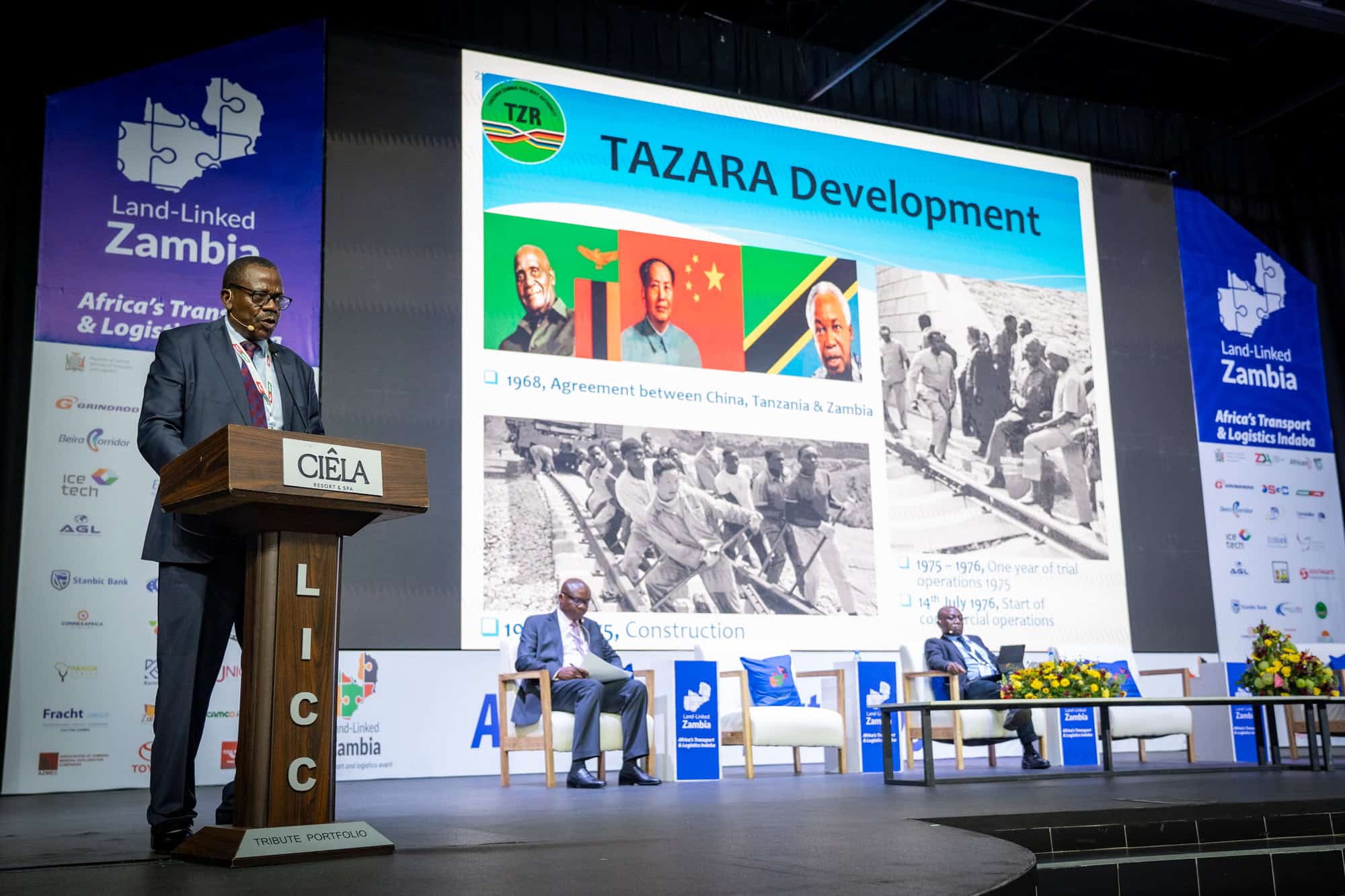
At the end of April, the Land-Linked Zambia 2026 Conference, hosted by Africast Conferences under the theme “Beyond borders: Reimagining Africa’s transport corridors for prosperity,” did more than spotlight rail and logistics. It underscored how well-curated industry events are becoming catalysts for national positioning, sector alignment, and technological advancement.
Across Zambia, a growing calendar of transport, logistics, mining, and agricultural expos is shaping a new narrative—one that positions the country not just as resource-rich, but as connected, innovative, and forward-looking.
Events as a tool for national positioning
Conferences and expos are no longer passive gatherings—they are strategic instruments of economic storytelling. By convening policymakers, investors, operators, and innovators, Zambia is actively:
- Showcasing its infrastructure ambitions
- Reinforcing its role as a regional trade hub
- Attracting investment beyond traditional mining
These platforms are helping shift the narrative from extraction to integration—how Zambia connects value chains across borders and sectors.
Taking events to the heart of industry
Encouragingly, this momentum is not confined to Lusaka or Livingstone. Events are increasingly being hosted at the epicentres of economic activity, bringing dialogue directly to where it matters most.
The Mkushi Agricultural Expo—convened by Lusaka Happening—continues to anchor conversations in the country’s farming heartland. Similarly, the inaugural Solwezi Mining, Motoring and Agri Expo, also convened by Lusaka Happening, recently held in Solwezi signals a deliberate move to engage the mining, transport, and agricultural ecosystem at source.
On the Copperbelt, the Zambia International Mining and Energy Conference (ZIMEC) in Kitwe has long served as a flagship platform, convening global and local players to shape the future of mining and energy in Zambia and the region. Meanwhile, the rise of provincial platforms such as the Luapula Expo and the Muchinga Expo reflects a growing commitment to decentralising opportunity and showcasing the unique economic potential of each region.
This shift is significant. It:
- Grounds discussions in real operational contexts
- Broadens participation beyond head-office perspectives
- Ensures that local players, suppliers, and communities are part of the conversation
It is a powerful statement that Zambia’s development story is not confined to administrative or tourist capitals, but is rooted in its production zones.
Aligning professionals and industries
One of the most impactful roles of these events is alignment. In sectors like transport, mining, and agriculture—where fragmentation can slow progress—these platforms:
- Bring together public and private sector stakeholders
- Create shared understanding of priorities
- Accelerate collaboration and decision-making
From railway operators and logistics firms to farmers, miners, and regulators, these gatherings break silos and build cohesion, enabling more coordinated execution of national priorities.
Accelerating technology and efficiency
Events are also becoming gateways for innovation. Across Zambia’s expos and conferences, new technologies are being introduced and demonstrated, including:
- Digital logistics and supply chain platforms
- Smart tracking and cargo management systems
- Rail modernisation solutions
- Mechanised and precision agriculture tools
- Sustainable mining technologies
By creating space for live demonstrations, knowledge exchange, and real-time engagement, these events accelerate the adoption of efficiency-enhancing solutions, helping industries reduce costs and improve competitiveness.
Extending impact through strategic communications
As the scale and significance of these events grow, so too does the need to amplify their impact beyond the venue itself. Strategic communications partners play a critical role in ensuring that the insights, partnerships, and opportunities generated at these gatherings are captured, packaged, and broadcast to wider audiences.
Through media engagement, digital content, and targeted storytelling, events can extend their reach to:
- Investors and partners who were not in the room
- Policymakers shaping national and regional agendas
- The broader public, whose awareness and support are essential for long-term success
In this way, events evolve from being moments in time to becoming ongoing narratives that influence perception, attract investment, and sustain momentum.
From dialogue to delivery
Zambia’s growing ecosystem of events—from transport and logistics forums to mining and agricultural expos—is increasingly interconnected. Together, they:
- Drive investment conversations
- Foster innovation
- Strengthen sector linkages
Railways, once seen as relics of the past, are now being reimagined through partnerships and ideas sparked in these very forums.
A platform for inclusive growth
As Zambia positions itself as a land-linked economy, events are proving to be more than just gatherings—they are platforms for activation. By taking conversations to the Copperbelt, North-Western Province, agricultural hubs like Mkushi, and increasingly to provinces such as Luapula and Muchinga, the country is ensuring that growth is inclusive, grounded, and participatory.
In this evolving landscape, the real impact of events lies not just in what is said, but in what is sustained. Through strategic positioning, industry alignment, the adoption of new technologies—and the amplification of these through effective communications—Zambia’s events are helping to build the networks, narratives, and partnerships that will define its future.address to the waitlist below to be the first to hear when we reopen the doors to new students.
— With files from Global AFP and The British Press