












For Zambia’s fuel station operators, tax compliance is increasingly becoming part of the forecourt operation itself – sitting alongside pump management, payments, stock control and daily reconciliation.
The Zambia Revenue Authority is giving businesses another opportunity to regularise their tax affairs through its Extended Voluntary Disclosure Scheme, launched this month.
Running from Sept 17, 2026 to Dec 31, 2026, the scheme allows eligible taxpayers with outstanding obligations to settle the principal tax due and receive a 100% waiver on accrued penalties and interest.
It comes alongside a broader push by the Authority to bring more business transactions into its digital tax infrastructure. For filling station operators handling hundreds or thousands of transactions across pumps, attendants and different payment channels, that shift has increasingly practical implications.
Compliance is moving closer to the pump
Smart Invoice is now an important part of that compliance environment.
By May 2026, ZRA said more than 44,110 businesses had adopted Smart Invoice. But the Authority has also made clear that registration alone is no longer enough: usage must be consistent, accurate and timely.
The compliance push has moved beyond education. ZRA has intensified field inspections and enforcement against businesses that fail to use the mandated electronic invoicing system correctly.
For the downstream fuel sector, that means compliance can no longer be treated simply as an accounting exercise that happens after the trading day has ended.
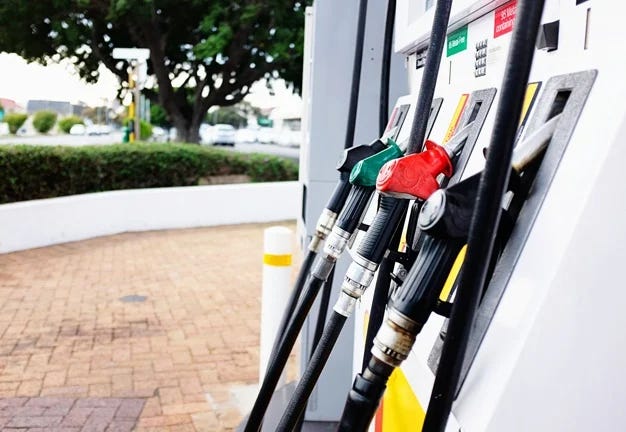
The transaction begins at the pump.
Fuel is dispensed. A payment is received. The transaction must be reconciled. Stock changes. Revenue is recorded. And where applicable, the corresponding tax invoice must be generated and captured correctly.
The challenge for operators is making all of those processes work together.
Some operators are choosing to build compliance in
While the enforcement environment is becoming more demanding, some businesses are responding by making compliance part of the operating system rather than a separate administrative layer.
Sabipay Technologies has received ZRA Smart Invoice certification and is integrating the system into the Pesapal Forecourt Management Solution it provides to fuel retailers in Zambia.
The integration connects forecourt transactions with payment processing, reconciliation and tax invoicing.
Rather than a station operator running one system to manage pumps, another to receive payments and a separate process to meet tax-reporting requirements, the objective is to allow those processes to communicate within one operating environment.
That is where compliance begins to overlap with innovation.
The ease-of-doing-business case
For fuel retailers, the bigger opportunity is not simply automating a tax invoice. It is reducing the number of separate processes a station operator has to manage.
A modern filling station has several moving parts: fuel inventory, pump activity, attendants, shifts, cash transactions, mobile and card payments, customer accounts and daily reconciliation. Layer tax compliance onto that environment and the administrative burden can grow quickly.
Integrated systems offer another approach. A transaction can begin at the pump and flow through payment, reconciliation and invoicing without requiring the operator to repeatedly capture the same information across different platforms.
For a single filling station, that can simplify administration. For businesses operating several stations, the benefit becomes potentially greater: a more centralised view of sales, payments, stock movements and compliance across the network.
That is also an ease-of-doing-business issue. Compliance is easier to sustain when the systems a business already uses can produce the required tax records as part of the normal operating workflow.
Digitisation is becoming part of energy logistics
Zambia’s downstream fuel infrastructure is expanding. More stations, greater fuel volumes and more sophisticated retail networks ultimately mean more transactions that have to be controlled, reconciled and reported.
The infrastructure required to support that expansion is therefore not limited to storage tanks, depots, pipelines, trucks and filling stations. It increasingly includes the digital systems sitting behind them.
For station operators, the emerging question is no longer simply whether they can comply with increasingly digital tax requirements. It is whether compliance can be designed into the operation in a way that makes the business itself easier to run.
That is the opportunity integrated forecourt platforms are beginning to address: using the same digital architecture to strengthen operational visibility, reduce reconciliation friction and make compliance easier to execute every day.
LOGISTICS NOW INTELLIGENCE SIGNAL
Zambia’s fuel-retail expansion is creating a parallel market for the digital infrastructure behind the forecourt. As compliance, payments, pump management, inventory and reconciliation converge, technology providers that can remove administrative friction could become an increasingly important part of the downstream energy value chain.