
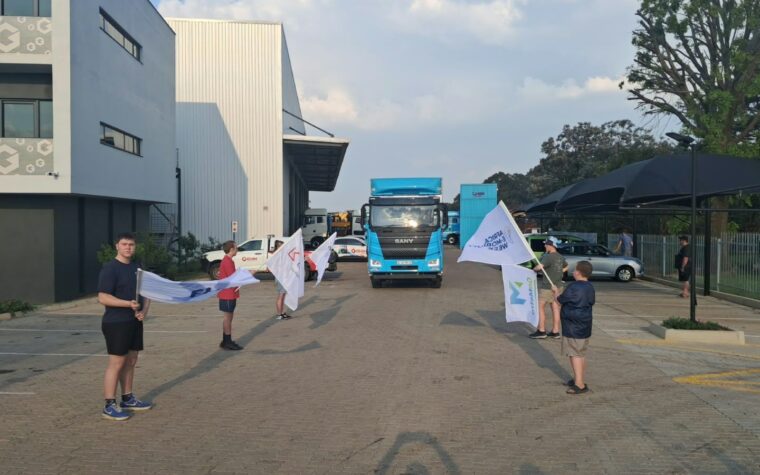













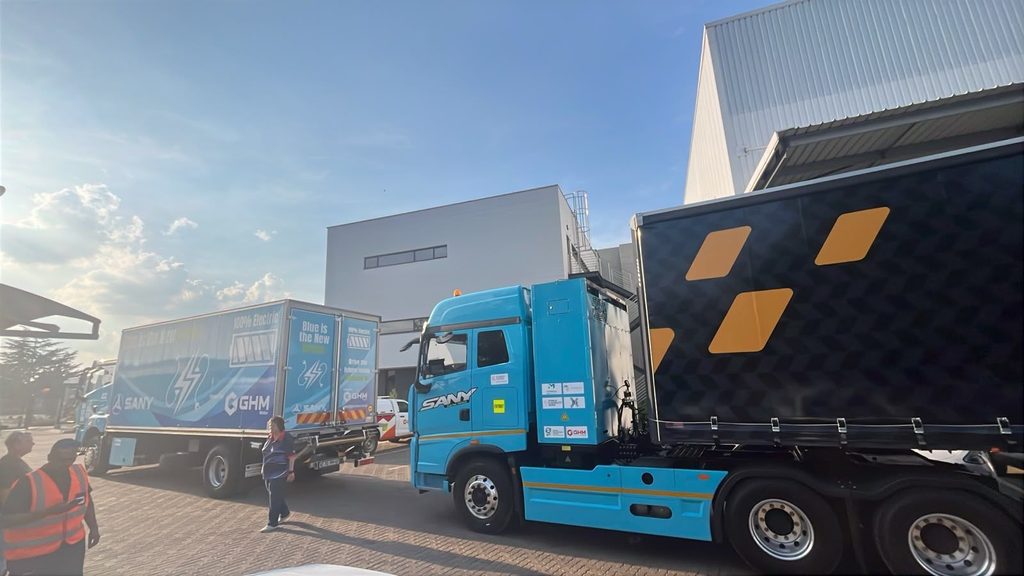
SOUTH AFRICA – Two production SANY electric trucks have started a 4,000-kilometre test across South Africa’s main freight corridors, in what organisers say could become the world’s longest independently verified trial of a battery-electric heavy truck.
The Mzansi EV Truck Super Test will take the trucks from Johannesburg to Cape Town, then through Gqeberha, East London and Durban before climbing back to Johannesburg.
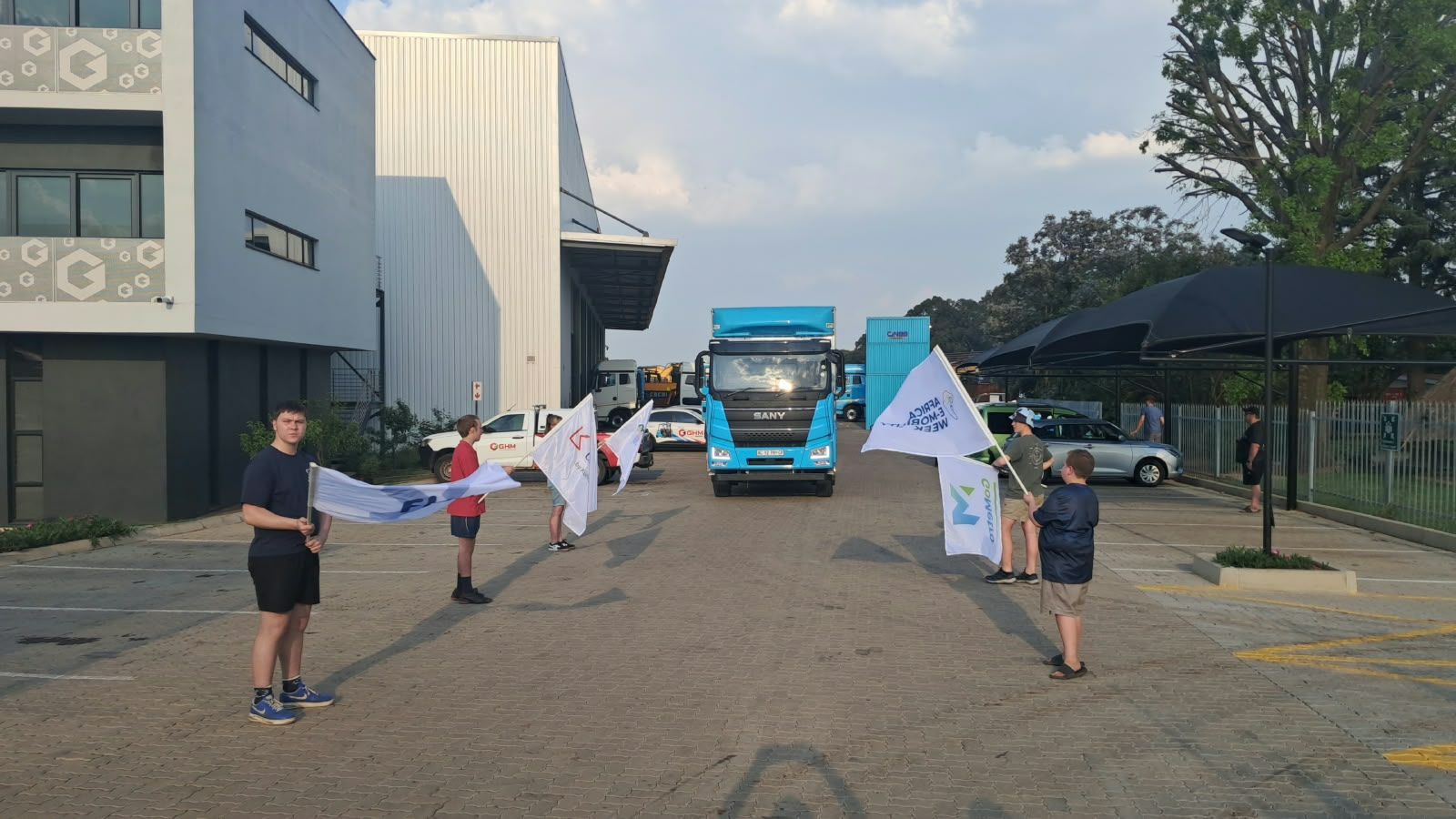
The trucks officially left the GHM yard on 24 September, beginning with the roughly 1,600 km Johannesburg-Cape Town leg on the N1. They are scheduled to reach Cape Town on 28 September for Africa E-Mobility Week.
But the distance is only part of the test.
The fleet includes a 35-tonne 4×2 truck tractor and an eight-tonne rigid truck, both operating on public roads and using commercial charging infrastructure rather than a manufacturer-controlled test environment.
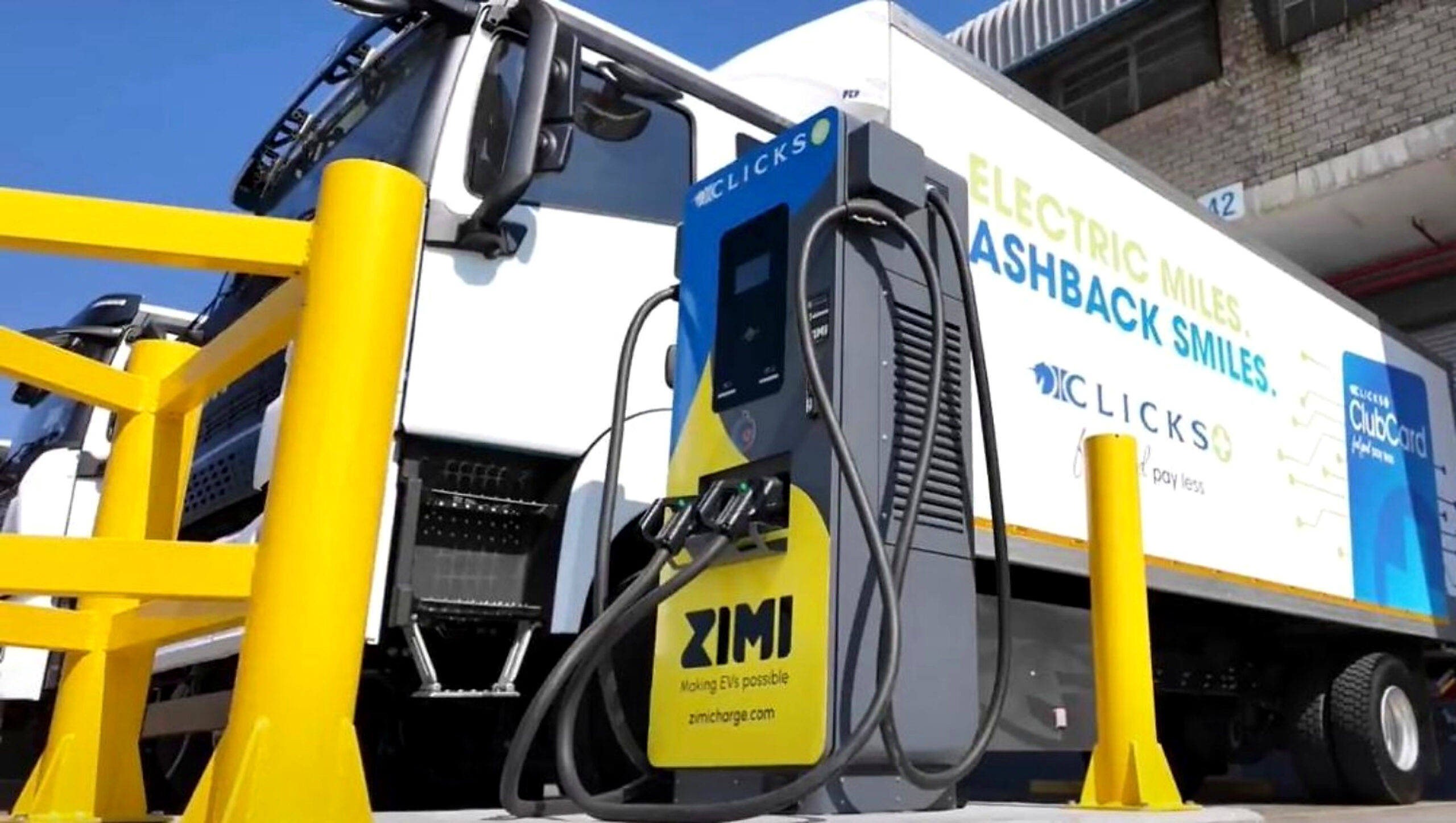
GoMetro’s ZAPPP telematics system will capture CAN-bus data every second, measuring vehicle performance and energy consumption throughout the journey. The trial will also test how effectively South Africa’s existing highway charging network, much of it developed around passenger vehicles, can support commercial trucking.
One of the most important sections comes later.
The trucks are expected to undertake a fully loaded climb from Durban to Johannesburg on the N3, giving operators data from one of Southern Africa’s most demanding freight routes.
Why it matters
For fleet operators, the question is increasingly shifting from whether an electric truck can move freight to whether it can do so productively.
That means kilometres between charges, charging availability, payload, energy consumed per kilometre, turnaround times and whether charging can be integrated into normal driver and freight schedules.
The current benchmark cited by the organisers is a roughly 3,000 km Volvo FH Electric journey between Switzerland and Spain in 2023, completed while carrying a commercial load. The journey required around 20 charging stops and took about seven days, compared with roughly four days for a conventional diesel truck.
If the South African test completes more than 4,000 km and receives independent certification, organisers say it would exceed that benchmark by more than 1,000 km. Smart Freight Centre is acting as independent verifier, including oversight of distance, payload and energy records.
The LN signal
The bigger story may ultimately be infrastructure, not trucks.
The test should begin identifying where high-capacity charging hubs would be required along the N1, N2 and N3 if electric heavy trucks are to move beyond controlled fleet deployments into long-distance freight.
That data could become increasingly relevant beyond South Africa too.
For Southern African logistics, the transition to electric trucking will ultimately depend less on showroom range figures and more on whether the region can build a charging network around the freight corridors where trucks actually operate.
Credit: Images by Justin Coetzee @ GoMetro