

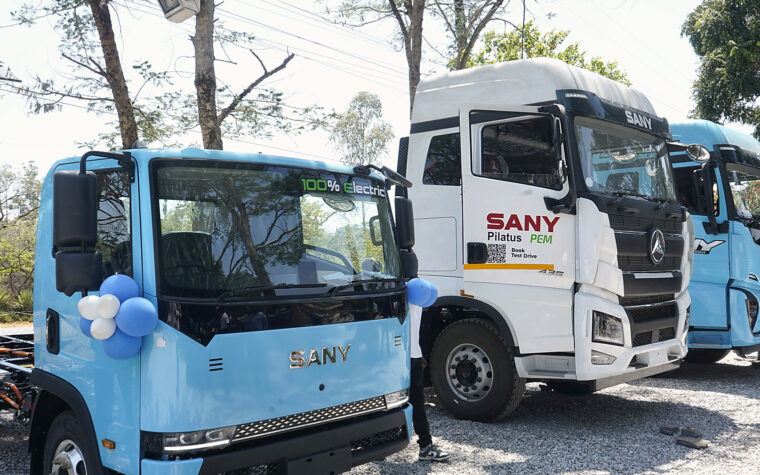














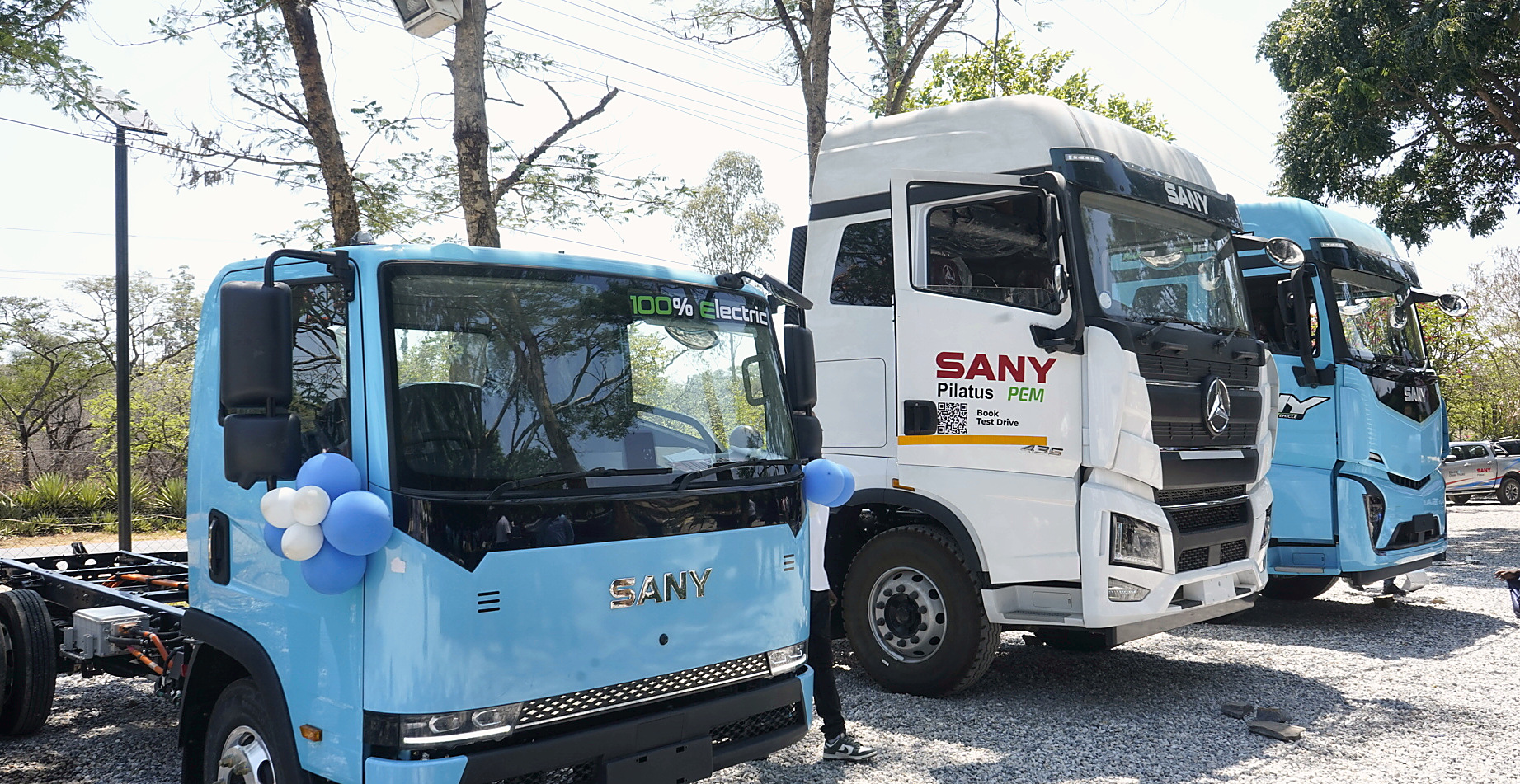
Pilatus Engineering has introduced six SANY commercial truck models to Zambia, supported by plans to expand charging infrastructure, technical support and service facilities across the country.
LUSAKA, 3 November 2026 — Pilatus Engineering Company Limited has officially launched six SANY commercial truck models in Zambia, introducing diesel and electric vehicles targeting the country’s mining, construction, agriculture and transport sectors.
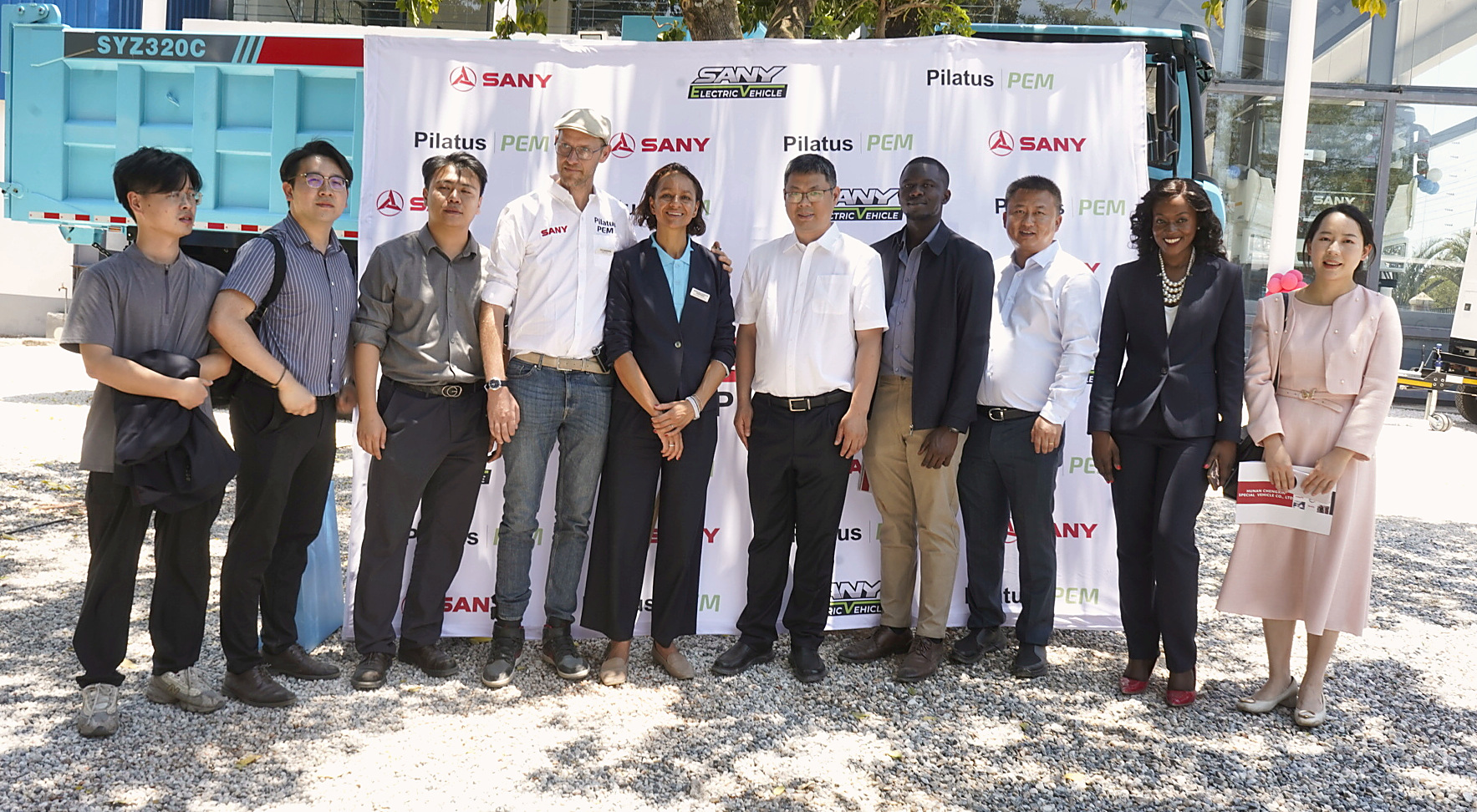
The launch, held on 3 November at the firm’s Leopards Hill Road facility in Lusaka, marks SANY’s expansion into Zambia’s commercial vehicle market and new investment plans to support electric heavy-duty transport.
Officiating at the event, Zambia’s Minister of Infrastructure and Urban Development, Hon. Collins Nzovu, described the introduction of electric commercial vehicles as an important milestone in Zambia’s transition towards cleaner transportation.
The six models comprise the SANY Euro II low-roof tractor head, Euro III high-roof tractor head, heavy-duty electric truck, light electric truck, diesel dump truck and electric dump truck, serving applications ranging from general freight to mining and industrial haulage.
Pilatus Outlines Charging and After-Sales Investment
Pilatus Managing Director Angelika Huwiler Andersen announced plans to expand the company’s technical and after-sales capabilities.
“At Pilatus, in 2027, our pledge is that we will have a full spec SANY truck workshop right here at Pilatus,” Andersen said.
The facility will be complemented by a diesel laboratory for testing, diagnosing, repairing and rebuilding high-pressure diesel fuel injection pumps. Pilatus also plans to establish a Copperbelt satellite workshop, bringing technical support closer to Zambia’s principal mining and industrial operations.
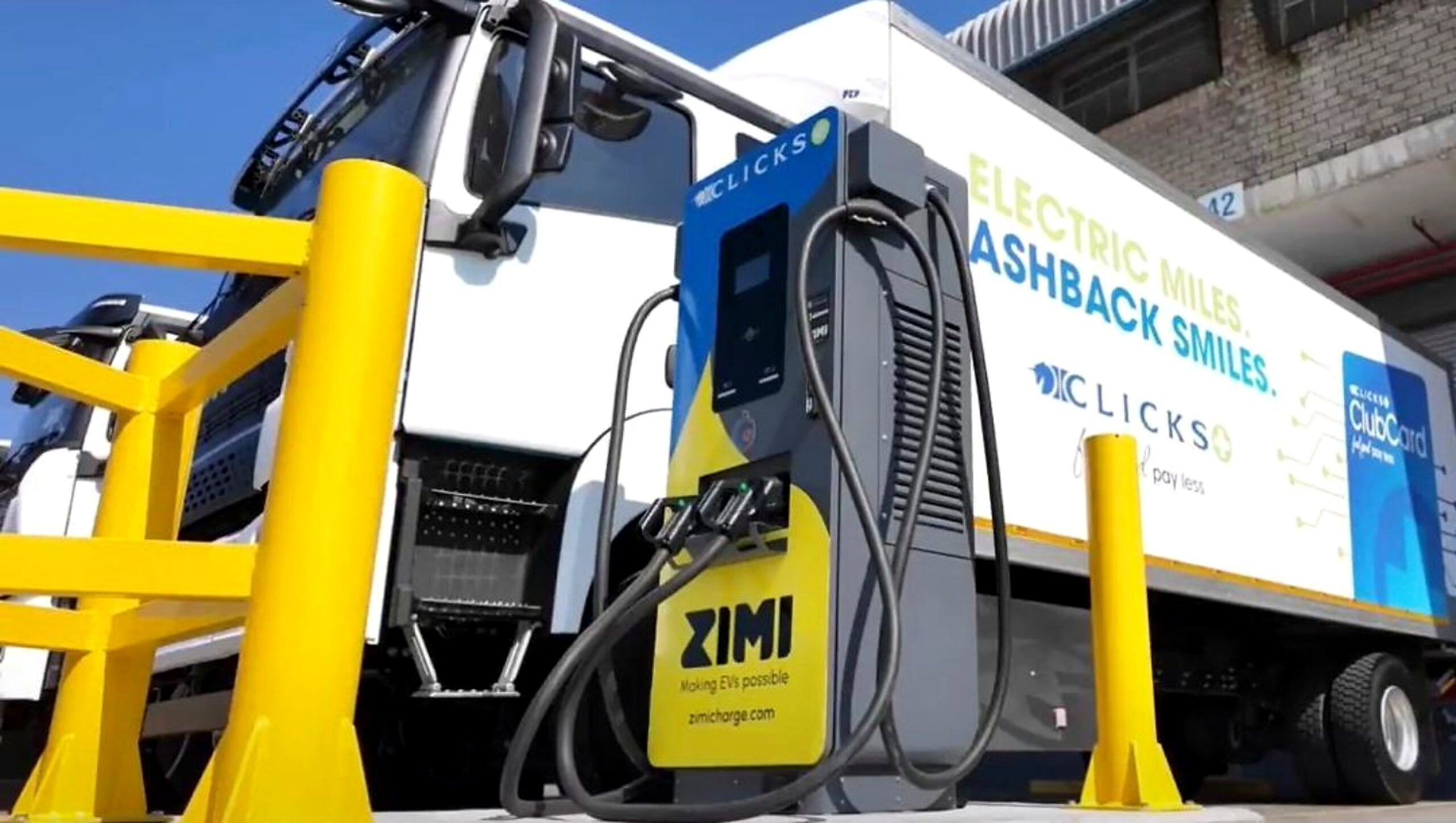
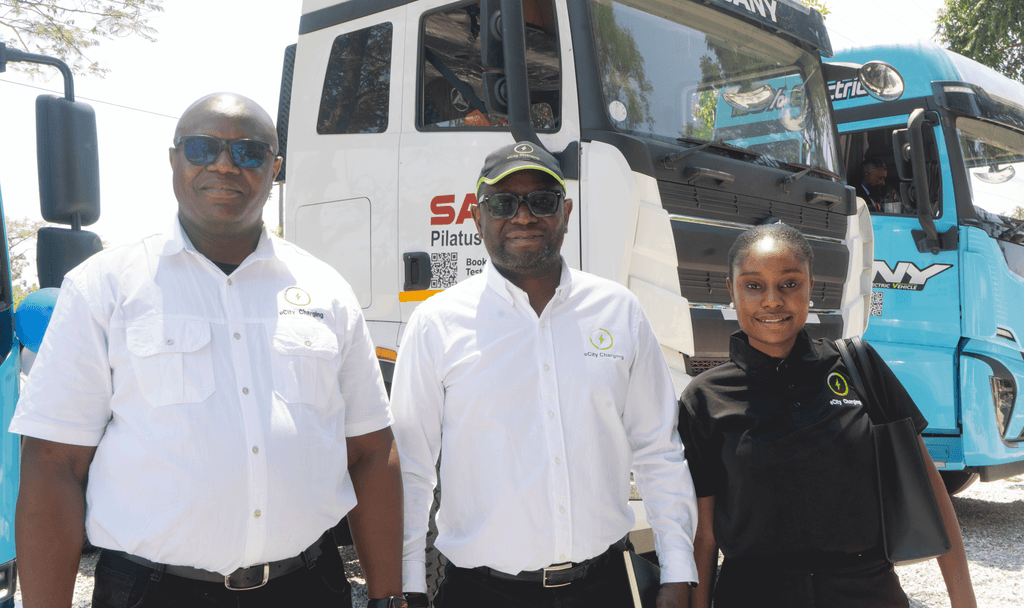
A significant part of the company’s electric mobility strategy involves its partnership with eCity Energies, which has previously supported Pilatus in introducing electric vehicle brands, including BYD, through the installation of charging infrastructure and provision of mobile emergency charging equipment.
eCity Charging already has charging stations in Lusaka, Kapiri Mposhi, Kitwe, Choma and Livingstone, with plans to extend its network to Solwezi, Pemba and Serenje, as well as locations beyond the line of rail.
The expanding network could become increasingly important as electric commercial vehicles enter the market, particularly in supporting intercity movement and reducing concerns about access to charging facilities. However, the availability of heavy-duty truck-compatible charging at these locations remains to be established.
At its Lusaka facility, Pilatus is also planning a green fuel and charging station incorporating passenger and heavy-duty truck charging, battery charging facilities, solar power and environmentally oriented design features.
The company has additionally launched a SANY showroom and announced an online sales platform in partnership with Mwebantu, providing customers with a digital vehicle purchasing channel.
Electric Trucks Offer Potential Operating Savings
Andersen told attendees that SANY electric trucks could be five times cheaper to operate than comparable diesel vehicles, highlighting potential savings for commercial fleet operators.
Actual savings in Zambia will depend on electricity tariffs, diesel prices, vehicle utilisation, maintenance costs and charging infrastructure.
She also highlighted SANY’s international operations, stating that more than 45,000 electric heavy trucks are operating across 50 countries and regions.
Andersen cited a reported single-charge driving record of 817.5 kilometres by a loaded SANY electric truck, although practical operating range will depend on payload, terrain, vehicle specifications and driving conditions.
SANY Sees a Future for Both Diesel and Electric Trucks
SANY Group’s General Manager for Africa Key Accounts, Wang Chao, said the partnership with Pilatus demonstrated the manufacturer’s confidence in Zambia and commitment to establishing a long-term presence.
“While diesel trucks continue to serve operational needs, electric commercial vehicles offer new opportunities where operating conditions, charging infrastructure and business economics make them suitable,” Chao said.
The approach recognises that diesel vehicles will continue serving operations requiring extended range and flexible refuelling, while electric trucks may offer advantages on predictable routes with suitable charging infrastructure.
For Zambia’s transport industry, this distinction is particularly relevant across mining operations, industrial haulage and long-distance regional freight.
Government Backs Electric Mobility Transition
Honorable Nzovu welcomed the investment, linking it to the government’s Grow Zambia agenda and the need for efficient transport systems to support expanding agricultural, mining and industrial production.
He highlighted Zambia’s strategic position as a land-linked regional trade hub, pointing to developments including the Lobito Corridor and the country’s ambition to increase annual copper production to three million tonnes.
The Minister also referred to a presidential directive for government ministries and departments to procure electric vehicles.
“As government, we shall support a provision of relevant infrastructure to support the transition to electric mobility, including charging stations,” Nzovu said.
He encouraged SANY and Pilatus to deepen their investment and develop local partnerships that strengthen Zambia’s commercial transport industry.
Building the Next Phase of Commercial Transport
The arrival of SANY’s electric and diesel trucks introduces additional choices for Zambian fleet operators as operating costs, energy efficiency and vehicle reliability become increasingly important.
Electric trucks could offer opportunities for mining and industrial operations with predictable routes and dedicated charging facilities. Long-distance freight applications, however, will require further development of charging networks and commercially viable operating models.
Pilatus’s investment plans, in conjunction with eCity Charging’s developing network, offer a foundation for addressing some of these requirements.
The longer-term significance of the partnership will depend on how effectively the vehicles, charging infrastructure and technical support respond to the operational and financial needs of Zambia’s transport industry.
Logistics Now Zambia | Keep Business Moving Forward