















Japan’s latest investment in Zambia’s railway sector puts the spotlight on an often-overlooked challenge in rail transport: keeping existing infrastructure operational, reliable and capable of supporting the country’s growing freight ambitions.
Zambia’s ambitions to move more freight by rail depend on more than new locomotives, rehabilitated tracks and expanded railway networks. They also depend on the equipment and systems needed to maintain those assets and respond when things go wrong.
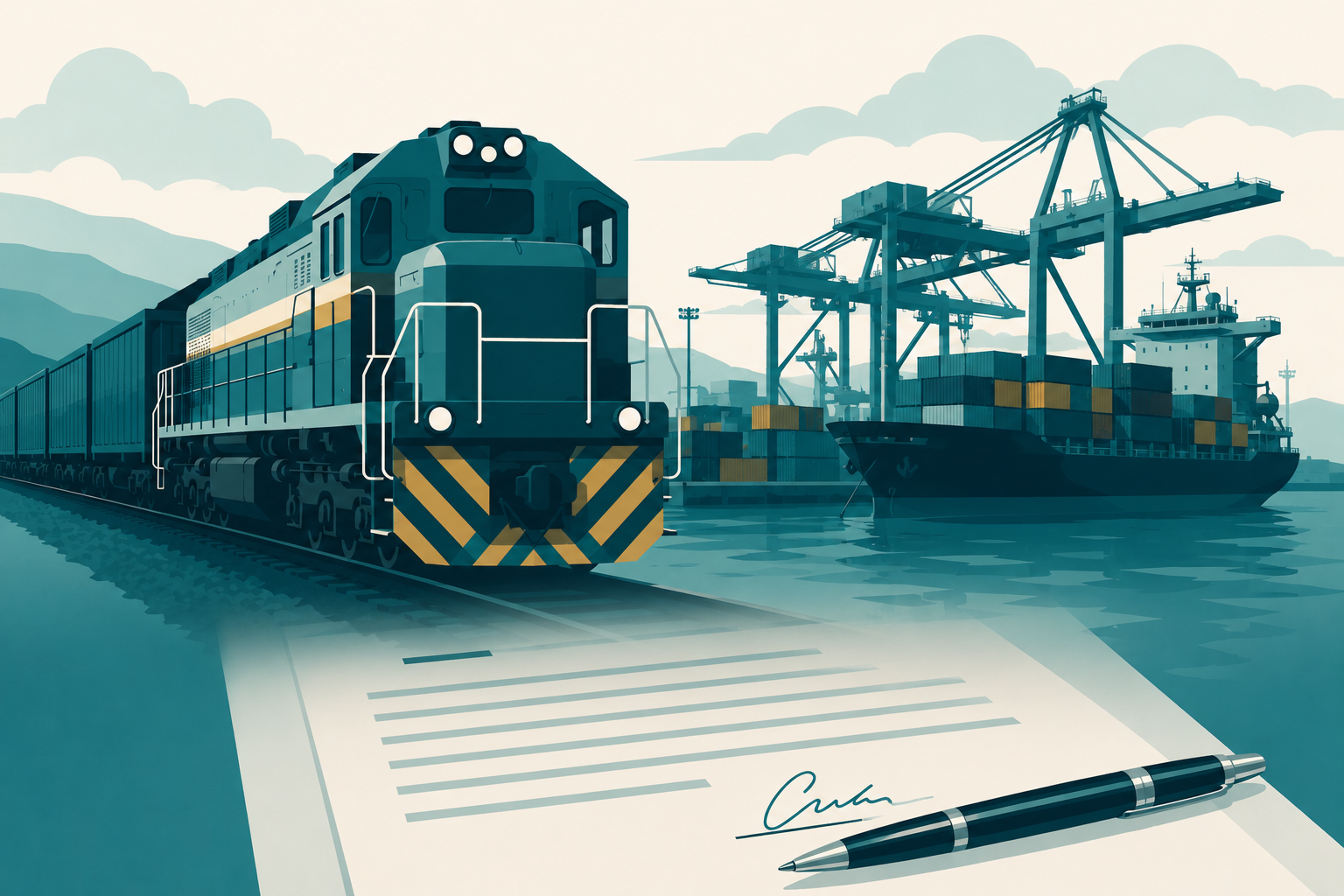
That is the significance of a new Japanese grant agreement, valued at ¥999 million (approximately US$6.3 million), aimed at strengthening the maintenance capabilities of Zambia Railways Limited.
The agreement, signed on 22 October 2026, provides for specialised railway maintenance equipment, including crane-equipped motor cars and road-rail crane trucks.
Unlike conventional road vehicles, road-rail equipment can operate on both roads and railway tracks, giving maintenance teams greater flexibility when accessing infrastructure, moving equipment and undertaking repairs.
For Zambia Railways, the investment addresses a critical component of railway performance: the ability to maintain infrastructure and respond effectively to operational disruptions.
Railway reliability is a supply-chain issue
For a landlocked economy such as Zambia, the reliability of transport infrastructure directly affects the cost and competitiveness of trade.
Mining companies need dependable routes for moving copper and other minerals to export markets. Agricultural producers need affordable transport for bulk commodities, while manufacturers depend on predictable deliveries of raw materials and finished goods.
Rail offers an important alternative to road transport, particularly for heavy and high-volume cargo. But its commercial appeal depends on more than theoretical carrying capacity.
A railway that experiences frequent disruptions, prolonged repairs or unpredictable transit times becomes a difficult proposition for businesses operating against production schedules and delivery commitments.
Japan’s Ministry of Foreign Affairs has identified ageing railway infrastructure and constrained operations as obstacles to stable freight transportation.
The ministry says the equipment will support track inspection, preventive maintenance and faster recovery following accidents, with the objective of securing more reliable freight services.
This is an important distinction. While much of the conversation around railway development focuses on expanding capacity, the ability to keep existing infrastructure operational is equally important.
A connection to the Nacala Corridor
The Japanese grant also forms part of a broader regional trade strategy.
Japan has linked the assistance to its Nacala Corridor supply-chain resilience initiative, announced during the Ninth Tokyo International Conference on African Development (TICAD9) in August 2025.
The corridor connects Zambia and Malawi to Mozambique’s Port of Nacala, providing an important Indian Ocean trade route.
For Zambia, stronger railway maintenance capabilities could contribute to the reliability of freight movements feeding regional corridors.
This connection is particularly relevant as Zambia pursues greater mineral production, agricultural exports and regional trade integration.
However, the grant announcement does not specify which sections of Zambia Railways’ network will receive the equipment first or establish new freight services along the Nacala Corridor.
Turning equipment into operational improvements
The agreement is a significant commitment, but its ultimate value will depend on implementation.
Several questions remain unanswered, including when the equipment will be delivered, how many units will be procured and whether the programme includes technical training and longer-term maintenance support.
Equally important will be whether Zambia Railways can demonstrate measurable improvements in track availability, response times following incidents and the reliability of freight services.
These are the operational outcomes that matter most to transport customers.
For Zambia’s wider logistics industry, the development reinforces a fundamental principle: building railway infrastructure creates capacity, but maintaining it creates reliability.
And reliability is what ultimately gives businesses the confidence to move their cargo by rail.