












Zambia’s new economic ministerial structure could sharpen policy focus, accelerate decision-making and strengthen the country’s logistics competitiveness. Its greatest potential lies in aligning industrial development, electricity, petroleum supply, transport infrastructure and export growth around a unified economic agenda.
Zambia’s latest restructuring of government ministries presents an opportunity to strengthen the institutions responsible for driving economic growth. For the logistics sector, the implications could be particularly significant.
By separating major economic functions into more specialised portfolios, President Hakainde Hichilema’s administration has established a framework for sharper institutional focus, clearer accountability and potentially faster policy execution.
The restructuring, approved by Parliament on 27 October 2026, expands government from 24 to 30 ministries. Trade and Exports has been separated from Industry, while Petroleum now operates independently of Electricity. Transport and Logistics retains its dedicated portfolio under new leadership.
The changes come as Zambia pursues major investments in mining, industrialisation, energy infrastructure and regional transport corridors.
For logistics operators, the opportunity extends well beyond transport policy. The industry’s performance depends on decisions made across government, from electricity generation and petroleum supply to industrial development, export procedures and infrastructure financing.
The central thesis is that greater ministerial focus could accelerate economic delivery, provided it is supported by stronger policy integration.
At the centre of this restructuring are five ministers whose portfolios collectively influence how Zambia powers industry, produces goods, moves cargo and accesses markets. Their professional backgrounds and the priorities they now oversee offer an important perspective on what the changes could mean for the logistics sector.
Charles Milupi: Connecting transport infrastructure to economic activity
The appointment of Charles Milupi as Minister of Transport and Logistics brings infrastructure experience to a portfolio central to Zambia’s regional trade ambitions.
Milupi holds an Honours Degree in Electrical and Electronics Engineering and previously served as Minister of Infrastructure, Housing and Urban Development.
At his swearing-in on 29 October, President Hichilema directed him to accelerate work on the Lobito Corridor, TAZARA revitalisation and Zambia Railways rehabilitation, emphasising the transformation of transport corridors into economic corridors.
The distinction is important for logistics. Transport corridors facilitate cargo movement, while economic corridors stimulate investment in industrial development, warehousing, distribution, agriculture and supporting services along their routes.
For Zambia, improved corridor performance could strengthen its position as a regional logistics hub, creating opportunities for freight operators, terminal developers, warehouse operators and other logistics service providers.
Milupi’s mandate presents an opportunity to connect infrastructure investment more closely with commercial demand, improving freight efficiency, rail utilisation and multimodal connectivity.
Makozo Chikote: Strengthening the petroleum supply chain
The appointment of Makozo Chikote as Minister of Petroleum creates dedicated leadership for a sector that directly influences freight costs and industrial competitiveness.
Chikote holds a Bachelor of Arts in Human and Social Studies from the University of South Africa and previously served as Minister of Energy, providing continuity in energy-sector administration.
Separating petroleum from electricity allows greater attention to fuel security, pipelines, storage, pricing and distribution.
For road transporters, fuel is among the largest operating expenses. Supply reliability also affects mining operations, agricultural production and industrial activity.
A dedicated ministry could strengthen coordination around TAZAMA, regional petroleum supply corridors, bulk-storage facilities and inland fuel distribution.
For the logistics industry, the potential benefits include more resilient supply chains, increased investment in petroleum-handling infrastructure and improved distribution efficiency.
The opportunity is to position petroleum logistics not simply as an energy concern, but as an essential component of national economic competitiveness.
Peter Kapala: Powering industrial and logistics growth
The establishment of a dedicated Ministry of Electricity under Peter Kapala places greater institutional focus on a critical enabler of Zambia’s industrial and logistics ambitions.
Kapala holds a master’s degree in Civil and Structural Engineering and previously served as Minister of Energy, bringing technical qualifications and experience in energy-sector administration to the portfolio.
Separating electricity from petroleum creates an opportunity for more concentrated attention to generation capacity, transmission infrastructure, distribution efficiency and long-term electricity security.
For Zambia’s logistics sector, reliable electricity is essential to the operation of industrial facilities, warehouses, cold-chain infrastructure and electrified railway systems.
Electricity availability also influences mining production, mineral processing and manufacturing activity, all of which generate demand for freight transport and supply-chain services.
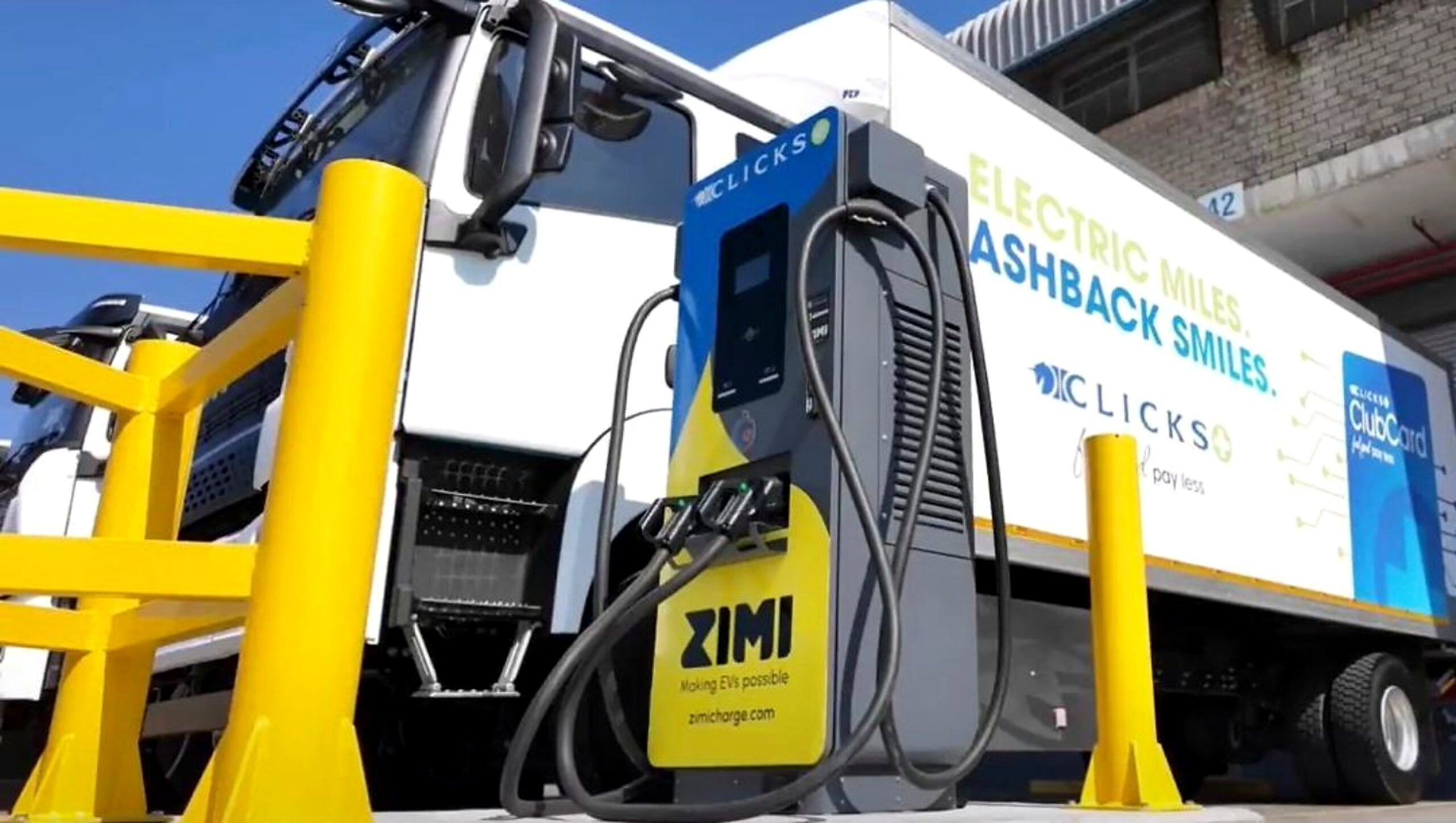
As electric commercial vehicles begin entering the Zambian market, charging infrastructure, grid reliability and electricity pricing could become increasingly important considerations for fleet operators.
A dedicated electricity ministry presents an opportunity to align power-sector investment more closely with industrial development, transport infrastructure and emerging logistics technologies.
The ultimate benefit for logistics will depend on whether reliable and competitively priced electricity supports greater production, more efficient operations and sustained growth in cargo volumes.
Dr Caroline Katotobwe: Connecting Zambian products to regional markets
The creation of a dedicated Ministry of Trade and Exports under Dr Caroline Katotobwe places greater institutional focus on connecting Zambian businesses to regional and international customers.
Katotobwe holds a PhD in Business Management, a master’s degree in Human Resource Management and a Bachelor of Arts.
Her ministry’s focus on trade policy, export promotion and market development could strengthen Zambia’s ability to translate productive capacity into sustained commercial activity.
Zambia’s recent trade mission to the Democratic Republic of Congo illustrates the opportunity. As manufacturers and agricultural producers identify regional customers, they generate demand for cross-border transport, customs clearing, warehousing, cold-chain services and distribution networks.
Yet export competitiveness depends on more than access to markets. Businesses also need predictable procedures, efficient border operations and reliable logistics services.
A dedicated trade and exports ministry could help align export promotion with trade facilitation, reducing unnecessary administrative barriers and improving the movement of goods.
For logistics companies, sustained export growth could generate higher freight volumes, stronger distribution networks and longer-term commercial relationships.
Noel Nkhoma: Industrialisation as a driver of logistics demand
The appointment of Noel Nkhoma as Minister of Industry creates dedicated leadership for Zambia’s industrialisation ambitions.
An economist and experienced banking executive, Nkhoma previously chaired the National Road Fund Agency, bringing experience in financial-sector management, infrastructure financing and governance.
The Ministry of Industry oversees industrialisation and investment policy, special economic zones, standards and quality assurance, alongside institutions including the Zambia Development Agency and Zambia Bureau of Standards.
For the logistics sector, industrialisation represents an important source of future demand.
Manufacturing facilities require inbound raw materials, machinery, spare parts and industrial supplies. Finished products require storage, distribution and transportation to domestic and export markets.
Mining-related manufacturing, agricultural processing and special economic zones could stimulate investment in industrial warehousing, freight terminals, distribution centres and specialised logistics services.
The opportunity is to develop stronger domestic production capacity alongside the logistics infrastructure required to support it.
Nkhoma’s portfolio therefore has implications beyond factories and investment, extending to the volume, diversity and sophistication of goods moving through Zambia’s supply chains.
Five ministries, one logistics value chain
The greatest potential of the restructuring emerges when these portfolios are viewed as parts of one economic system.
Industry develops productive capacity. Electricity powers industrial and logistics operations. Petroleum supports fuel security and distribution. Transport and Logistics connects production centres to markets. Trade and Exports helps Zambian businesses reach customers beyond the domestic economy.
Each ministry has a distinct responsibility, but the logistics sector operates across all five.
Consider a Zambian manufacturer supplying the DRC market. The business requires reliable electricity, dependable fuel supplies, industrial facilities, compliant products, efficient transport and predictable export procedures.
When these systems work together, businesses can respond more quickly to commercial opportunities, reduce costs and compete more effectively.
For logistics providers, the benefits could include higher freight volumes, improved corridor utilisation, new warehousing opportunities and growing demand for specialised services.
The restructuring’s greatest value therefore lies not simply in strengthening individual ministries, but in improving the entire economic value chain that logistics connects.
The integration imperative: Greater focus, one economic direction
Specialised ministries create opportunities for deeper sector expertise, clearer accountability and faster decision-making.
However, the benefits of specialisation depend on government institutions working towards shared economic outcomes.
For Zambia, this means ensuring policy unity across industry, electricity, petroleum, transport, trade, mining, agriculture, infrastructure and finance.
An industrialisation strategy should be supported by corresponding plans for electricity generation, fuel supply, transport infrastructure, investment financing and export-market development.
Similarly, investment in a major transport corridor should be coordinated with industrial zones, reliable energy infrastructure, logistics facilities and trade facilitation initiatives to stimulate economic activity along its route.
Achieving this alignment requires shared priorities, coordinated implementation plans, clearly defined responsibilities and effective mechanisms for resolving cross-sector bottlenecks.
For businesses, stronger integration could translate into greater regulatory predictability, faster approvals, improved infrastructure coordination and more efficient supply chains.
The defining opportunity is to make government more focused in its responsibilities while remaining unified in its economic direction.
Herein lies the restructuring paradox: greater specialisation can enable faster delivery, but its full potential depends on greater integration.
What success would mean for Zambia’s logistics industry
The impact of the restructuring should ultimately be measured through commercial outcomes.
For transport operators, success could mean lower operating costs, more reliable infrastructure, improved access to fuel and shorter corridor transit times.
For warehouse operators and logistics developers, it could mean greater investment in industrial facilities, distribution centres, cold-chain infrastructure and freight terminals supported by reliable electricity.
For exporters, it could mean simpler procedures, faster border clearance and more predictable access to regional markets.
For mining and industrial supply chains, it could mean stronger domestic supplier networks, reliable energy supplies and more efficient movement of inputs and finished products.
For emerging electric fleet operators, it could mean improved charging infrastructure and a clearer pathway towards adopting new transport technologies.
Milupi brings engineering and infrastructure experience to transport and logistics. Chikote offers continuity in energy administration. Kapala contributes technical expertise and electricity-sector experience. Katotobwe brings advanced business-management qualifications to trade and exports. Nkhoma contributes banking, economic and infrastructure-financing experience to industry.
Their individual mandates create opportunities for more focused execution. Their collective effectiveness could help determine how successfully Zambia connects production, energy, infrastructure and markets.
Zambia’s new economic structure offers a framework for sharper strategic focus. Its potential for the logistics sector lies in translating that focus into coordinated policies, more efficient supply chains and stronger commercial activity.
Greater focus. Stronger integration. Faster economic delivery.
For Zambia’s logistics industry, that is the opportunity.
Logistics Now Zambia | Keep Business Moving Forward
Image: From left, Noel Nkhoma (Industry), Dr Caroline Katotobwe (Trade and Exports), Charles Milupi (Transport and Logistics), Peter Kapala (Electricity) and Makozo Chikote (Petroleum). The restructuring presents an opportunity for greater policy focus, stronger integration and faster economic delivery across Zambia’s logistics and industrial value chains. Illustration: Logistics Now Zambia.