













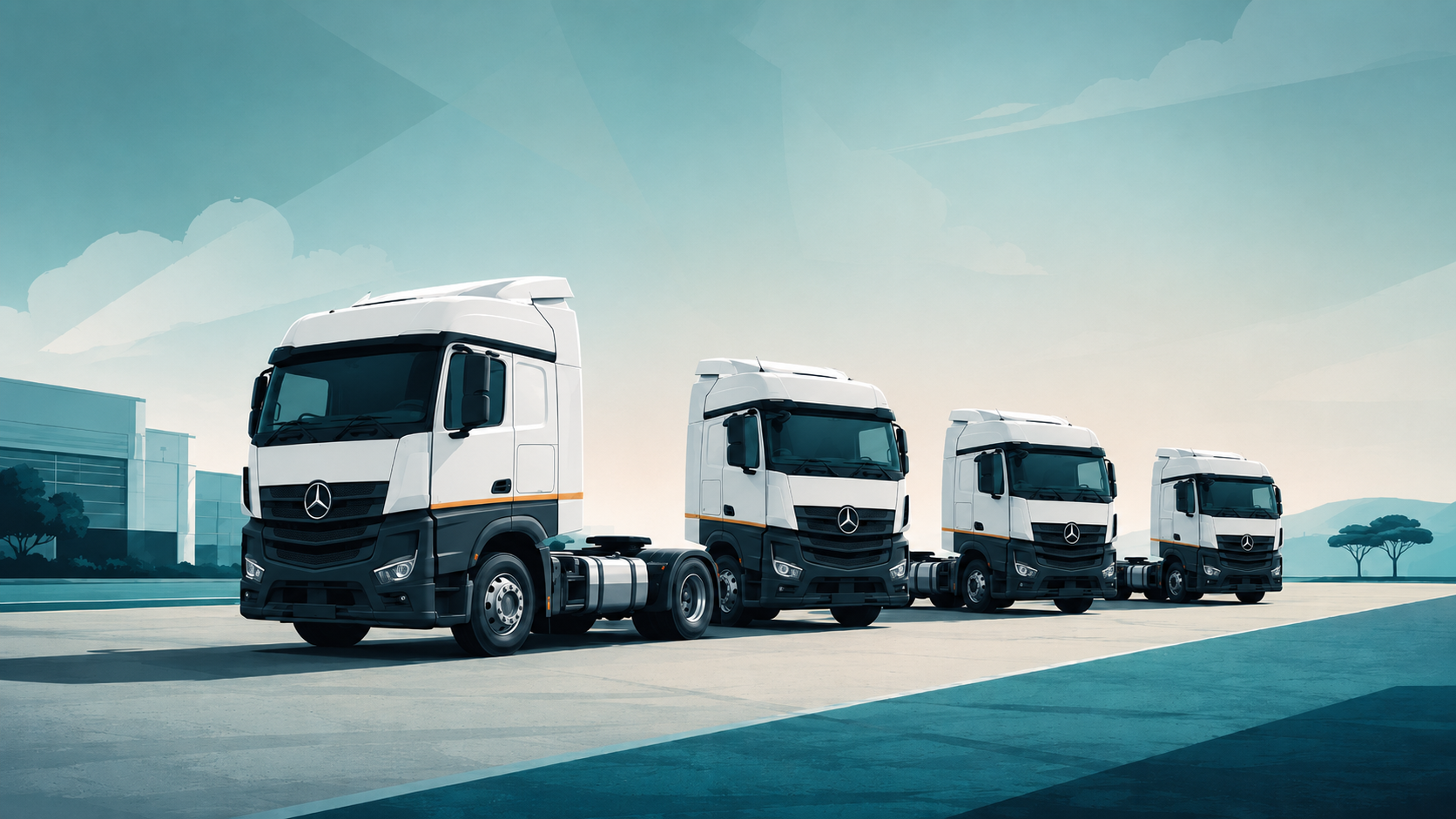
Daimler Truck Southern Africa has added four new Mercedes-Benz Actros models to its regional product range, pointing to renewed activity in the fleet market.
The launch includes the Actros 2645LS/33 Base, Actros 2645LS/33 Line Haul, Actros 2652LS/33 Line Haul and Actros 2652LS/33 Base. DTSA group CEO and president Maretha Gerber framed the launch around customer demand and the company’s push to become more customer-centric. Sales and marketing vice-president Olaf Peterson outlined the technical updates behind the new range.
For fleet operators, the product detail matters. The trucks include improved chassis material designed to lower weight while supporting higher carrying capacity and strength. They also feature LED headlights, with an expected run time of 30,000 to 50,000 hours, which should help reduce maintenance and downtime compared with halogen lights.
Depending on the model, the trucks use either the OM460 or OM473 engine. The OM473 includes turbo compound technology, which transfers energy from exhaust gas to the crankshaft through a hydraulic clutch to help reduce fuel consumption. The trucks are also fitted with a siphon-proof device to help prevent fuel theft.
That is why this launch matters beyond the showroom.
Fleet operators are buying in a tough market. Routes are demanding. Operating costs are high. Financing is not always easy. Customers expect reliable delivery. In that environment, the best truck is the one that can stay on the road, access parts and perform under regional conditions.
South Africa also influences fleet choices across Zambia and the wider SADC region. Product launches there can affect what becomes available through dealers, what support improves and how regional operators think about replacement cycles.
For suppliers, the opportunity extends beyond the truck itself. New products create demand for parts, tyres, diagnostics, telematics, maintenance, driver training, financing and fleet-management support.
The key question is simple: will the product and support ecosystem help reduce downtime and improve fleet reliability?
If yes, the impact will be felt well beyond the showroom.